
Eighth Offering: Vision
"I would make a home in the North and bring them there, God helping me."

How should we address you?
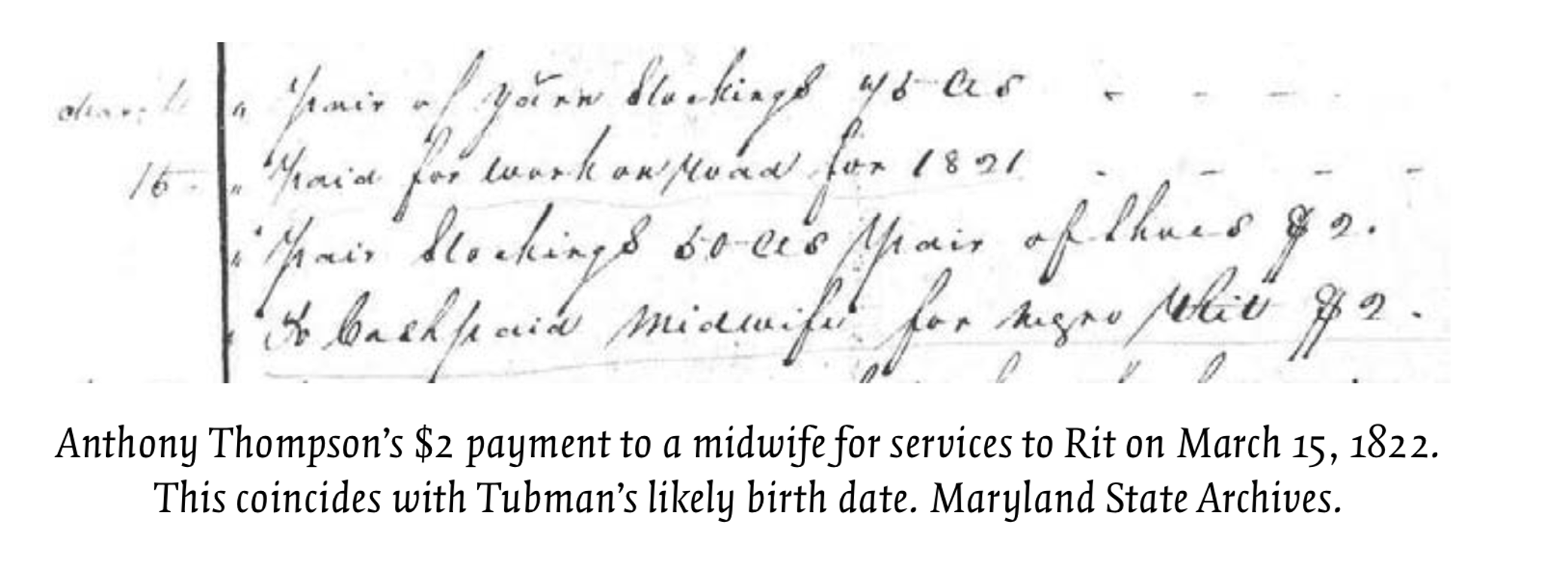
He called you Minty. The white man with the doctor for a son. He owned your father. He owned your mother. He cared enough about you being born to pay the midwife for her services--which is to say he cared enough about his property to make sure you arrived whole, full, sane enough to lift, throw, push, and pull on the land he called a farm, but should be called a plantation. Over one thousand acres, over forty enslaved people. This was no small enterprise.
Language is strange here in Maryland. No romance for the wicked, but no real acknowledgement either of the damage done, the role slavery played. I’m a Chicagoan, I can empathize. Those Old Northwest black laws don’t sound nearly as sexy fine as “Land of Lincoln” after a man who wanted to send newly emancipated women, children, and men to Africa because the political cost of integrating Black people into the body politic seemed too high.
I digress. And I shouldn’t. Because we, Marylanders (am I one?) do acknowledge YOU.
In 2023, a scientist found your father’s home on his former owner’s land.
How many times did you run back there? Not to free him (he was freed by the time you left), but to visit him, your Baba, sit at bended knee, feel his hand on your forehead. I have a daughter now, she has a father, and their bond is intense, exquisite, pristine. How many times would she return just to look in his eyes and see herself reflected back?
The answer is forever. The answer is say less.
The white man who called the midwife didn’t call you by your full name just like he didn’t call your mother by her full name. What is it about white mastery that can’t pronounce a few extra syllables? You became Minty. She remained Rit.
And you worked. Domestic. Field hand. Dock worker. Lumberjack.
These are not names. We can’t call you by your labor. And we can’t call you by “girl!” which is probably what some overseer, supervisor, paddy rollers called you. As in “hey girl, stop him” which may have been what the overseer called out when he came after Barrett. Why Barrett left the plantation, not sure we know. But we can imagine. Fall season. Harvest time. Plenty to do. Sometimes you just want a break. You could understand that and even if you didn’t agree, you knew who the real enemy was. You knew that you don’t help enslavers if you can avoid it. If you have a good reason not to.
“When the slave was found, the overseer swore he should be whipped, and called on Harriet, among others, to help tie him. She refused, and as the man ran away, she placed herself in the door to stop pursuit. The overseer caught up a two-pound weight from the counter and threw it at the fugitive, but it fell short and struck Harriet a stunning blow on the head.”1
The blow, the visions, the fainting spells that followed would continue for the rest of your life.
Who knows what you saw in that blinding light.
You named yourself Harriet when you married that man John, the one you would leave when you ran for freedom, the one you came back for. Harriet and Tubman. A married name. A married woman. When you came back, though, he wouldn’t leave with you. He was free, you see, and he’d already re-married. You married a...well, grace can be given. It’d been two years.
And he didn’t know what you knew—that you were God sent and had more than purpose. You had vision.
In any case, you left that man and kept his name. And went to find your niece to take with you instead.
Thirteen times you went back and forth, crossed hell’s gate and returned. Over seventy people, across these trips. We imagine what those trips must have been like, but we can’t really know. To describe those journeys in text in the years before the Civil War, before the Thirteenth Amendment, was to court death.
At the beginning of Night Flyer, Tiya Miles unearths one scene for us to chew on in the present day:
“The storm was coming. She sensed its approach in the shift of the wind, the click-clack of branches, and the eddies of sea-moistened air. She craned her neck to view the sky, dark through a scaffold of winter-tree canopy. Wrapping her arms across her chest, she pulled her woolen shawl close, then knuckled one hand to her heart and curled the other around her revolver. Ever watchful of nature’s signs, the woman waited....
“Petite with a slender build and still limber in her late thirties, she pressed her back against the bark of a thick tree. This might have been a loblolly pine, the species that coated the old-growth forests along the Eastern Shore of the Chesapeake Bay. A companion to the stranded woman who stood barely five feet tall, that evergreen would have cast a net of protective crystalline needles.
“As Tubman waited, “night came on and with it a blinding snowstorm and a raging wind. She protected herself behind a tree…and remained all night alone exposed to the fury of that storm.” Tubman took shelter against the tree’s trunk, shivering through the evening as other warm-blooded creatures, like fox squirrels and snow geese, skittered, burrowed, or folded frigid, ice-tipped wings.”
Miles asks:
“What was it like to tuck into the dark depth of the winter woods? What was Tubman thinking as she shrunk beneath the branch-umbrella, listening for animal sounds behind the screech of the wind? Was she worrying about the fugitives who had not come yet, fearing the hunters trailing them and the trackers always searching for her? Was she turning over in her mind the cascade of events that had led her here to a test of her mettle and the silent company of this tree?”
Of course, you might answer with:
“I just asked Jesus to take care of me,” Harriet explained to the questioner, proclaiming that divine intervention had protected her from freezing that night.”
William Lloyd Garrison would call you Moses, eventually. The name fits, of course. Except Moses never saw the Promised Land. Maybe Garrison never believed enslaved would either. Oh, he hoped. Prayed. But even Douglass eventually parted ways with him because he wouldn’t go far enough.
Enslaved knew there could be no compromise in the fight for freedom.
You knew it too. As you guided them by hand through the woods, as you dodged dogs and patrols and rocks and rivers, the Fugitive Slave Act was passed (1850). It required everyday citizens to help capture slaves who had run away. Federal commissioners were appointed to special commissions that decided who could stay and who would be sent back South. Sheriffs and judges were paid more money for slaves caught and returned ($10) than those released ($5), incentivizing grift, fraud, and kidnapping of free Black people. Anyone who helped runaways could be fined or imprisoned and everyone living in the North became implicated in the immoral acts of the Slave Power (however agnostic they felt about Black peoples cranial capacities or biological fitness for citizenship).
For white people, citizen or not, slaveowner or not, after 1850, the line in the sand was clear—you are either for freedom or you are an enslaver.
Meanwhile Dred and Harriet Scott waited for the decision on their case (1854), Celia killed her rapacious owner (1855), and Margaret Garner killed her daughter (1856).
You knew that convincing white people, with their millions of dollars invested in white cotton and Black bodies, in international slave trades, and in all the ancillary and related industries (insurance, printing, clerking, real estate, transportation, fabric factories, even corn production—because, of course, what must the enslaved eat) was not a battle you wanted to fight.
You didn’t mind John Brown’s acts of bloody violence in Kansas, you didn’t blink twice at his follow up attempts to lead an uprising against Harper’s Ferry. He was executed for his efforts, but he set the bar for white solidarity. We know these co-conspirators, white activists and actors who have been killed because they dared to reject the status quo of Black death, genocide, and occupation. Renée Good and Alex Pretti and Heather Heyer, Viola Liuzzo would also be killed.
Which makes me wonder: Was Moses was a name you tolerated, even used, especially to spread the message of abolition? A useful narrative device?
Did you like General more? After all, when the time came, you fought. You worked for the Union army as a domestic (again), but also a spy, a teacher, a scout. You helped organize, lead, and execute the Combahee River Raid in South Carolina, which freed enslaved people up and down the rice plantation corridor.
You did not shy away from war. Your God wanted peace, but he knew that sometimes you needed to rise up to get it.
There is another reason I’m not so sure if I should call you Moses, a cheekier one, perhaps.
You named yourself Harriet, when the time to marry John came. You kept Harriet when you married again. Nelson Davis, twenty five years old. He fought in the war as well. Purrrr.
“We do not consider her second marriage to Nelson Davis, a younger man, her Tea Cake, a marriage that remains a grossly understudied site for thinking through Tubman’s erotic subjectivity. Although this second marriage supports a framing ofTubman as invested in sustaining a heteropatriarchal family structure, one could also consider the sexual agency she exercised when deciding to partner with a significantly younger man. We do not ponder what it means that they met during the Civil War but would wait to be married until after the battle dust cleared, when she had time, when she returned to New York, when John was dead.
“Despite her first husband’s rejection, one could reflect on feelings of longing and desire for romantic satiation that Tubman may have endured during her separation from John, before meeting Davis. We indulge a bit in the details of her first wedding as a freedwoman, the church where it was held, the announcements registered, the dignitaries present (Clinton 2004). We do not take the same pleasure in envisioning her wedding night. We do not envision her wedding night at all-or twenty years of nights thereafter. We lack imagination. The archive demands imagination.
“Instead, she is Black Moses. Undefiled by carnal desire, she is a black revolutionary body impervious to human needs and wants. She is a trope to be used and deployed, refashioned from being into memory and elevated to icon.”2
You did not shy away from freedom. The end of the war, the Emancipation Proclamation, the Thirteenth, Fourteenth, and Fifteenth Amendments, the Reconstruction era, the rise of the Ku Klux Klan—whew, you saw that the Promised Land and it needed work if it was going to fulfill its promise.
And that was okay by you, because you had a vision. Of a home.
They denied you pay as a soldier; you collected on Nelson’s after he passed away. They denied you military recognition for one hundred and sixty one years. You talked about your service anyway. Not until 2024, under its first Black governor, Wes Moore, did the state of Maryland commission you to the rank of brigadier general.
You would have liked the pension, the recognition, for sure, if only for the financial support they might have brought you. But you had a vision. Of a home, for the most vulnerable. For the girls who are sick, as you were sick when that two pound weight struck you in the head. For the elders who needed a safe place for repose, as your father and mother deserved, a just reward for a life lived at labor. For the freedpeople who found themselves stuck out in the cold because of landlords who would refused to rent to Black people, employers who only hired freedpeople as domestics and laborers, landowners who would only parcel out plots on shares and paid only in plantation scrip.
Even in the North, white people refused to see the truth—that the slave trade was the gravest crime against human rights the world would ever see, that the entire structure of the nation had been built on the backs of the half million enslaved recently freed by constitutional amendment and their fathers, mothers, grandfathers, grandmothers, great-grandfathers, and great-grandmothers. A spreading web of lost and taken kin. Many thousands gone.
You allow your biography to be published (1868). You take care of your family. Nelson dies, but you continue organizing, speaking on behalf of women’s suffrage as well as the needs of the freedpeople. You eventually receive a pension.
In 1896, you buy land in Auburn, New York. You use the proceeds from your autobiography (now in its second printing), your pension, Nelson’s pension, and you fundraise to make it happen. But you do.
On that land, you build the freedom that you’d dreamed of: a safe place, a place of repose, a place of healing. A home and hospital for indigent, aged, and sick Black people.
You live to see it all, eyes wide open. You built the freedom you needed, step by step, brick by brick.
And then you die, an elder, at that home, in 1913. Your tombstone would read Harriet Tubman Davis.
This year, Pauline M. Copes-Johnson, one of your great-great-grand nieces passed away at the age of 98. She was born fifteen years after you passed away. You only just missed her. We know the first fugitives you helped liberate from slavery were your niece, Kessiah Jolley, and her children. We know kinship pulled you back South again and again. We know you took aunt-ing very seriously. Never in the diminutive “auntie” way. Always in the Black love is Black wealth “Auntie” practice of one who loves their nieces and nephews and knows they are their own.
Well, your kin claimed you too, though they had to keep some things secret for awhile.
“It was a secret because the confederates wanted her, and although she was dead, they would come after the relatives,” Copes Johnson told theGrio. “They thought I’d give it away because I was very young then.”
Even into the 1920s and 1930s, the children of slavewoners hunted Black flesh.
This offering is for your vision of marronage, of home, and of kinship. It is for the sinew and muscles that kept you moving back and forth across the line to free others as you’d freed yourself. It is for the act of refusal that, even as a teenage girl, you held true to, standing in the doorway of the store against an overseer brutal enough to throw a two-pound weight and risk a child. It is for the love you found and the love you took and the loves you freed from their bonds. It is for the spiritual clarity and focus you demanded of yourself and those around you.
You knew an end to slavery would come and it would only come if we made it happen. You knew wars and laws and amendments might be needed, but freedom would mean nothing if freedpeople didn’t have what they needed to live. You knew the vote was a necessary part of creating the conditions for freedom and so is a place to heal broken bones, weary spirits, and tired souls.
Clear eyes. Clean message. Stay on the path. Don’t look back.
I lied at the beginning. We know how to address you. We know what to call you.
Harriet Tubman Davis, ibae. We call you ancestor.
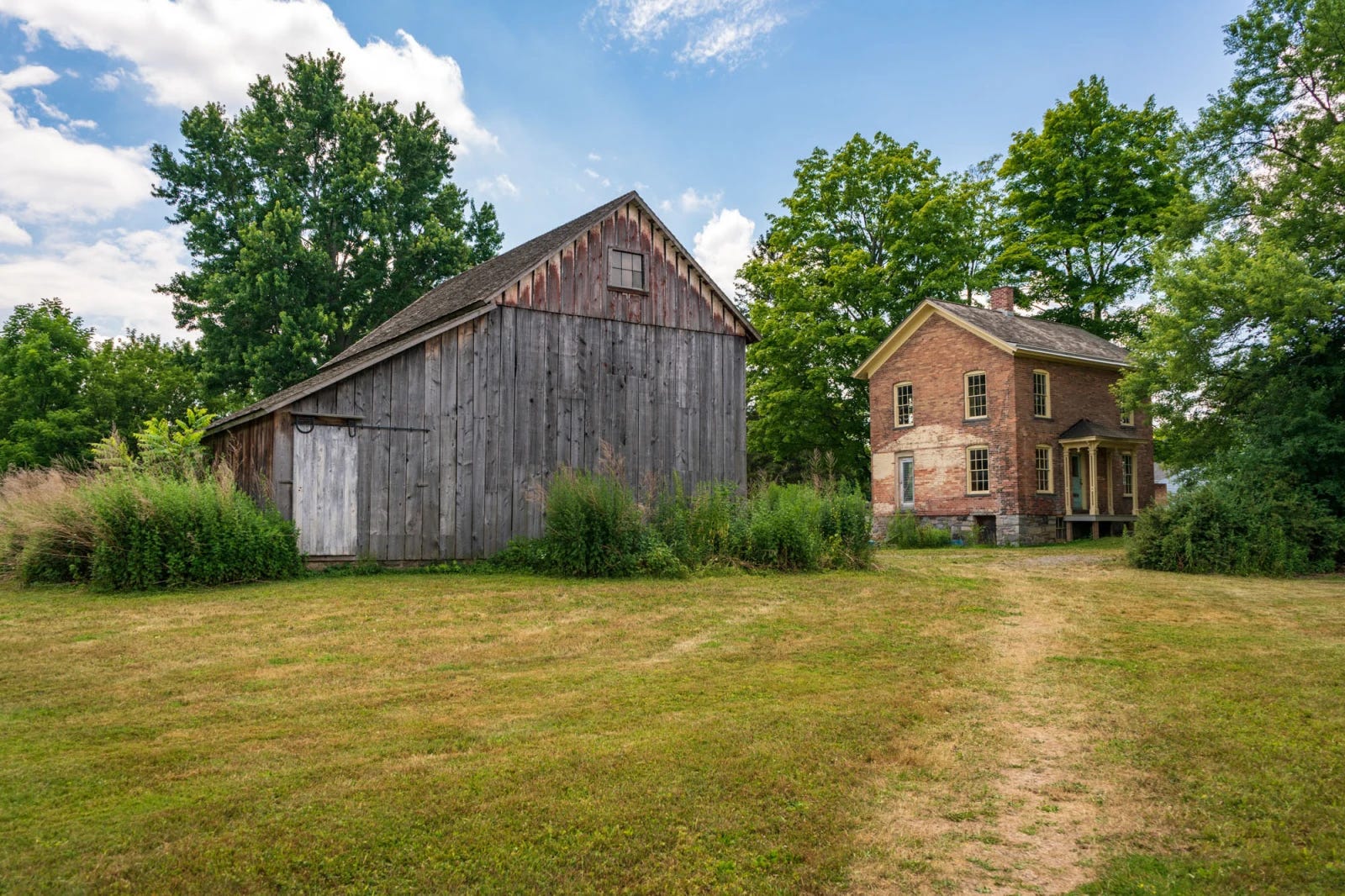
Header Image: Harriet Tubman’s Auburn Home, National Historical Park, New York
Readings
Scenes in the Life of Harriet Tubman (as told by Harriet Tubman to Sarah Bradford), 1869
Karsonya Wise Whitehead. “Beyond Myths and Legends: Teaching Harriet Tubman and Her Legacy of Activism. ” Meridians: feminism, race, transnationalism 12, no.2 (2014): 196–218.
Alexis Pauline Gumbs. “Prophecy in the Present Tense: Harriet Tubman, the Combahee Pilgrimage, and Dreams Coming True. ” Meridians: feminism, race, transnationalism 12, no.2 (2014): 142–52.
Tiya Miles, Night Flyer: Harriet Tubman and the Faith Dreams of a Free People (Penguin Press, 2024).
Treva B. Lindsey and Jessica Marie Johnson, “Searching for Climax: Black Erotic Lives in Slavery and Freedom,” Meridians 12, no. 2 (2014): 169–95, [PDF here]
Reuters and The Associated Press, “UN Passes Resolution Naming Slave Trade ‘Gravest Crime against Humanity,’” Al Jazeera, accessed April 4, 2026, https://www.aljazeera.com/news/2026/3/25/un-passes-resolution-naming-slave-trade-gravest-crime-against-humanity
“Archaeologists: Site of Harriet Tubman’s Father’s Home Found,” Opb, accessed April 4, 2026, https://www.opb.org/article/2021/04/20/archaeologists-site-of-harriet-tubman-s-father-s-home-found/
“List of Anthony Thompson’s Negroes [Sic],” Maryland Center for History and Culture, n.d., accessed April 4, 2026, https://www.mdhistory.org/resources/list-of-anthony-thompsons-negroes-sic/
MPT Digital Studios | Maryland Underground: Thompson Farm, n.d., accessed April 4, 2026, https://www.pbs.org/video/maryland-underground-thompson-farm-32i8hu/
“False Quote on Freed Slaves Wrongly Attributed to Harriet Tubman,” AP News, October 4, 2018, https://apnews.com/article/archive-fact-checking-2312300417.
This is offering #8 of Stitch Open My Eyes a 12-week community offering on history and memory in slavery’s archive. Because the Black freedom struggle during slavery should be a topic of conversation at every kitchen table. Follow along by subscribing below.
Scenes in the Life of Harriet Tubman (as told by Harriet Tubman to Sarah Bradford), 1869
Powerful, beautiful offering.
This made me return to the archives, and here are two newspaper sources on her remembering.
Garrison "delighted" in referring to her as his "Foster Sister," according to this brief biographical sketch.
The Indianapolis Freeman, Nov 5, 1892, p. 5, bottom of column 6, https://www.loc.gov/resource/sn82016211/1892-11-05/ed-1/?sp=5
A full page of stories and illustrations, "The Moses of Her People," from the early twentieth century.
The San Francisco call (San Francisco [Calif.]), September 29, 1907, pg. 14,
https://www.loc.gov/resource/sn85066387/1907-09-29/ed-1/?sp=14
🙏