

Do you remember?
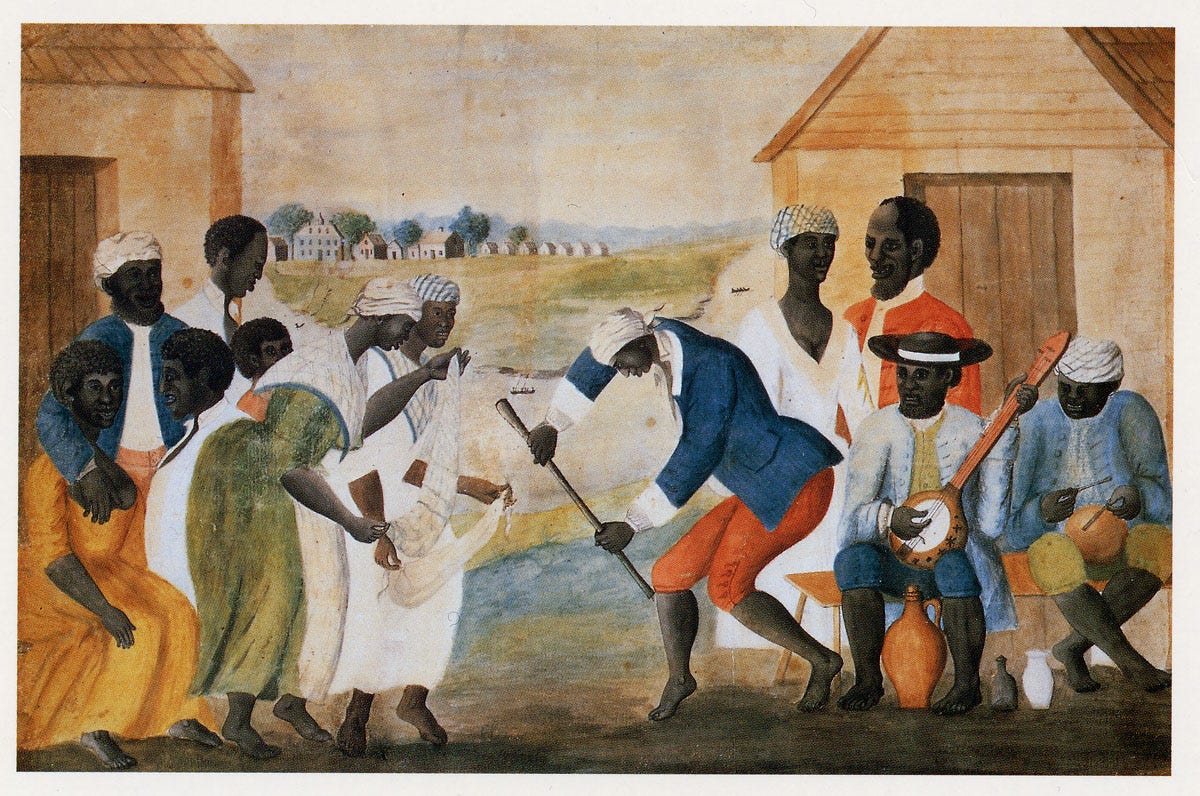
The ones who danced the path of the rising sun, from east to west, following the long arch of the Tendwa nza Kongo, the cosmogram? They marked time in hand claps and stomping feet, these children of Africans who didn’t need instruments to keep the traditions of their mothers and fathers, grandmothers and grandfathers, alive. Their shouts, blocked by the turned down pot, and stomps, poured from them and into the Great Awakening as it came sweeping across the farms and valleys of the Lumbee and Mvskoke, the shores of the Yamasee and the Guale. This land—land the British called the Carolinas—did not smell the same as Kongo, Ndongo, or Angola, but gods travel and so do the dead, and the Great Awakening gave them all a good excuse to meet somewhere in the middle.
Protected by proper Protestant prayer, the Tendwa nza Kongo became a cross and the ring ceremony became a ring shout. Right before our eyes, Black folk flew back to Africa on the wings of transcendence, to the beat of our heels on the ground.
Library of Congress, McIntosh County Shouters: Gullah-Geechee Ring Shout from Georgia, 2011, 57:07
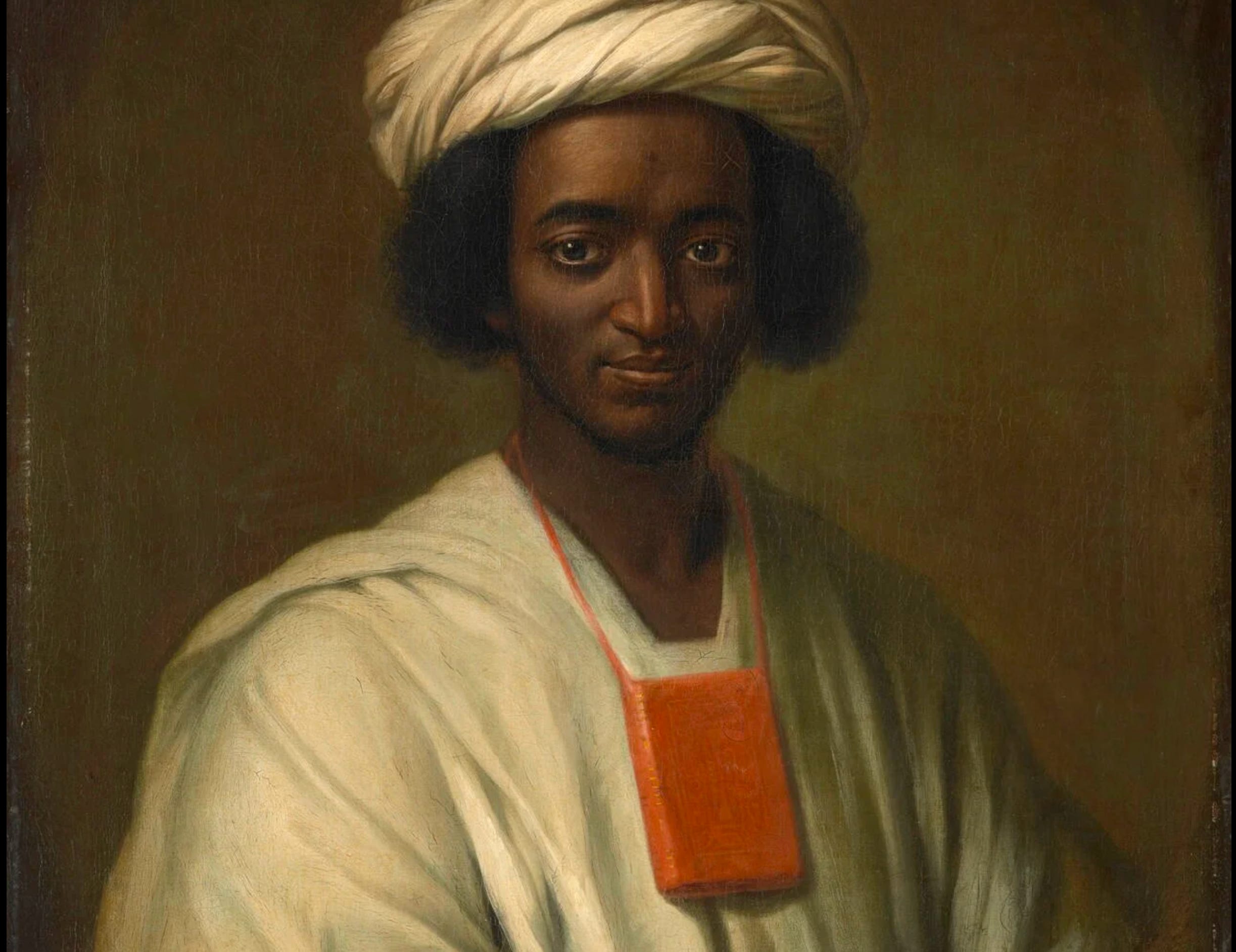
Do you remember? The ones who laid their heads on the ground at sunset, licked their finger and flicked the pages of the Bible from right to left, reading by candlelight and wishing for a Koran? That’s how Ayuba Suleiman Diallo fought the name they gave him. Job Ben Solomon. Who that man? Not when he knew his surnname back and forwards in the language of his forefathers.
He should have known better than to get involved with the white men, to labor for them in the flesh-stealing enterprise that Allah abhorred. By the time he was captured in the Gambia and sold to the English in 1732, landing in Maryland where he was put to work separating tobacco leaves from their stems, the slaveowning landowners of the Calvert family’s colony had grown used to stripping Africans of their names. Somehow, they left him with his, even if they did Anglicize it, Christianize it, stuff its soft consonants into an ill-fitting box. Job for Ayuba. It took a Wolof kinsmen to recognize the way his mouth moved over the language of his heart, to identify him as royalty to the white men with no God he felt bound to respect. Or so they say.
In truth, Ayuba must have met many countrymen in the land of the infidels, must have found covert kinship in their mutual ache for homeland and heritage.
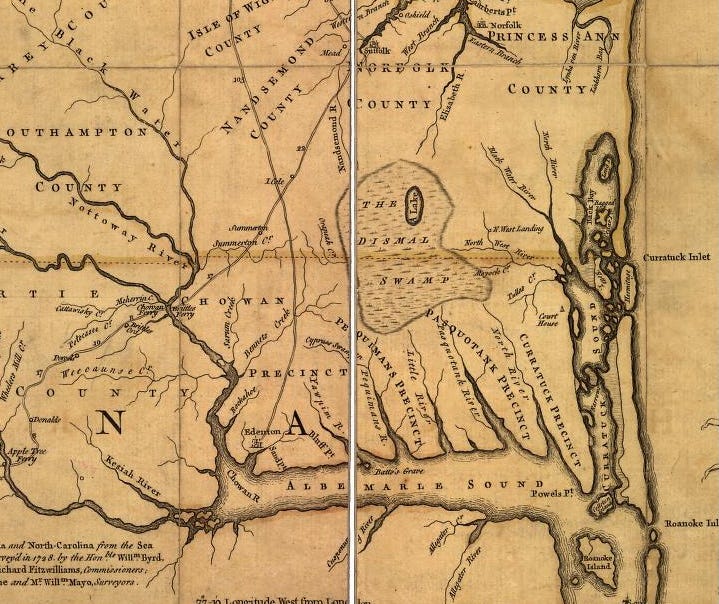
Do you remember? The ones who woke up and said: today is the day. The white people were at church, the landowners and overseer alike. Praying together for salvation and the camaraderie to survive the Black anger around them.
That Black anger woke the women and men up, and they woke up the children, and together they began voting. Who would be the leader? Who would make the decisions? Not an easy choice to make, but necessary. Someone had to be ready to make choices—which tree to turn left at, which snakes to avoid. They were prepared for this meeting. For weeks, though 1729 and to that day in 1730, “many meetings and Consultations of the Negros in several Parts of the Country in order to obtain their Freedom” had occurred across Virginia.
When the leaders were chosen, they began to walk. They walked beyond Norfolk until they reached the edge of the water, until the moist, autumn forest closed around them, until the mosquitos stopped biting their ears and their feet grew soft from treading water. They walked until they found a place to call home.
When the white people came back, they found the cabins empty, their kitchens cold. No Sunday meal for them. Over three hundred enslaved people wound their way to the Dismal Swamp on that day. They didn’t all make it—but they became, in the words of June Jordan, a menace to their enemies, a horror story for enslavers who looked at the swamp and saw the end of slavery stalking them from its dark, stank depths.
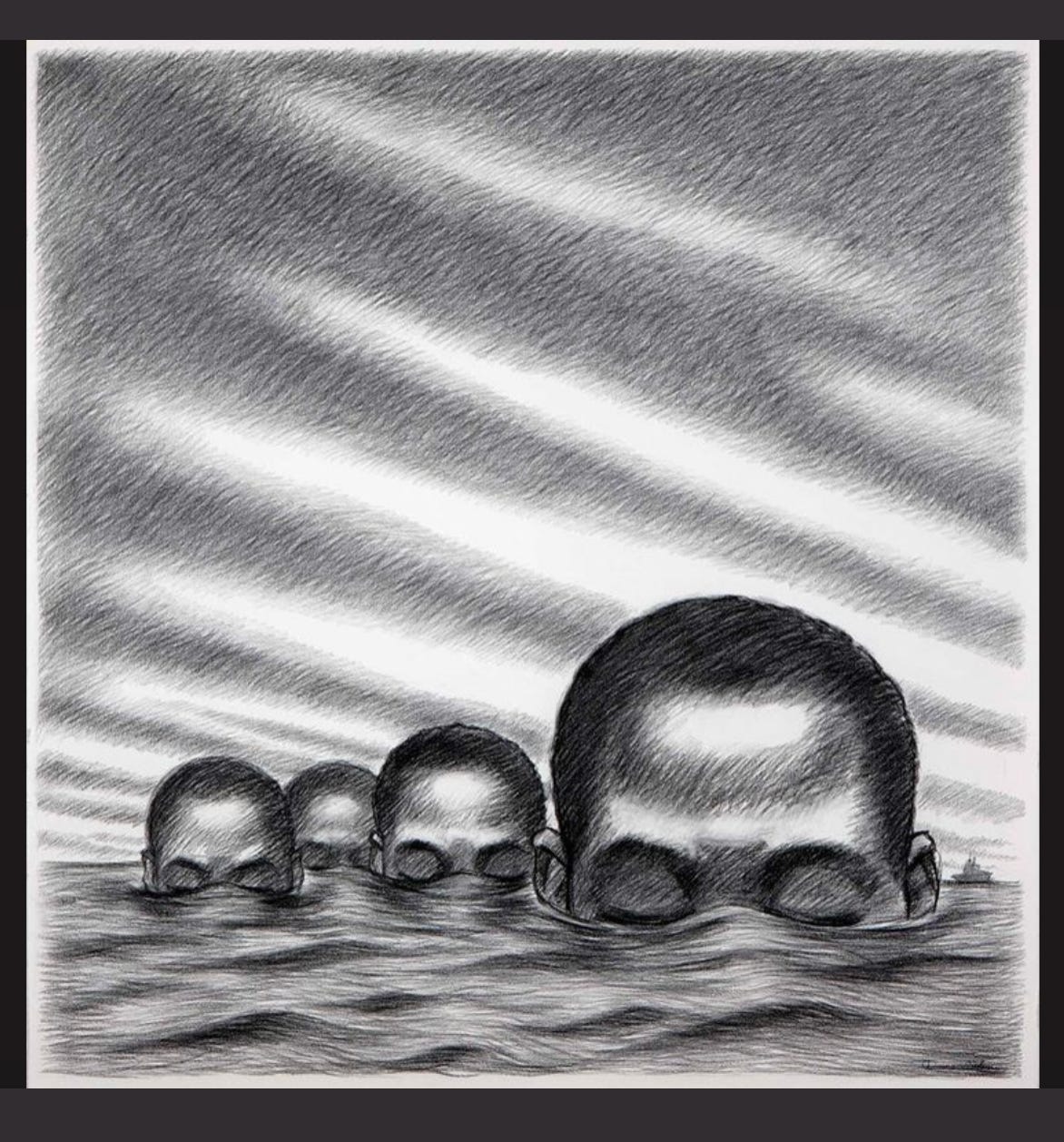
Do you remember the ones who choose the most final of freedoms, bitter in the mouth, martyr names on the tongues of their comrades on the shore? Julie Dash wrote about them, put her words into Eola Peazant’s mouth, asked her to tell us:
“It was here at the bottom. They took him out the boat. Right here, where we do stand. Nobody remember how many of them it was. But there was a good few, according to my Great Gran. She was a little, little girl at the time. The ship had just come from the deep water. This great big old ship would sail. The minute those Igbo was brought ashore, they just stop and take a look round. Not saying a word, just studying the place real good. And they seen thing that day that you and I don’t have the power to see.
“Well, they had seen just about everything to happen around here that day. The slavery time, the war my Gran always talk about. [Laugh] Those Igbo didn’t miss a thing. Even seeing you and me. Standing here talking.
“When they got through sizing up the place real good and seeing what was to come, my Gran said they turn. All of them. And walk back in the water! Every last man, woman and child.
“Now, you wouldn’t think they’d get very far, seeing as it was water they was walk on. Had all that iron on. Upon the ankle and the wrist. And fastened around the neck like dog collar. But chains didn’t stop those Igbo none. They just kept walk like the water was solid ground. And when they got to where the ship was, didn’t so much as give it a look. Just walk right past it. Cause they was going home.”
A writing etched in spirit, a memory awakened by time, a time draped in red. Only five years before the end of the Atlantic slave trade, captive Africans took hold of their ship just off the Georgia Sea Islands. They broke free, killed the crew, and the ship ran aground. Undeterred, their leaders led them into Dunbar Creek, causing the legendary mass drowning.
Except, “only a subset of the 75 Igbo rebels drowned. Thirteen bodies were recovered, but others remained missing, and some may have survived the suicide episode, making the actual numbers of deaths uncertain.” Except, the people could fly. And they said “they was going home.” Walking on water all the way there.
This offering is for the ones who rebelled and resisted and rejected the burden of bondage in plain view, not out of sight. Who lifted feet and pens and axes, put them to the work of slicing apart the world, forced the next one into view. Who flew, hearts and minds, away from this place even as it was being born, being made and remade.
And it is an offering for us, in the present, to see them with both eyes open, to witness where resistance is, where it maps onto our own skin, where the weapons of the weak can be held up to the sky, our fists tight, our cries shaking the walls of enclosure down.
Readings
Jerome Handler, The Old Plantation Painting at Colonial Williamsburg: New Findings and Some Observations | Jerome S. Handler, n.d., accessed February 20, 2026, https://jeromehandler.com/2010/12/the-old-plantation-painting-at-colonial-williamsburg-new-findings-and-some-observations/.
Michael A. Gomez, Exchanging Our Country Marks: The Transformation of African Identities in the Colonial and Antebellum South (Chapel Hill: The University of North Carolina Press, 1998).
Ira Berlin, “Time, Space, and the Evolution of Afro-American Society on British Mainland North America,” The American Historical Review 85, no. 1 (1980): 44–78, JSTOR, https://doi.org/10.2307/1853424.
“African Muslims in Early America,” National Museum of African American History and Culture, accessed February 20, 2026, https://nmaahc.si.edu/explore/stories/african-muslims-early-america.
Ryne Beddard, “The Power of the Dead: BaKongo Inspiration and the Chesapeake Rebellion,” Commonplace, n.d., accessed December 30, 2025, https://commonplace.online/article/the-power-of-the-dead/.
“The Water Spirit Will Take Us Home,” accessed February 20, 2026, https://www.searchablemuseum.com/the-water-spirit-will-take-us-home/.
Sylviane Diouf, Slavery’s Exiles: The Story of the American Maroons (New York University Press, 2016), .
June Jordan, “I Must Become a Menace to My Enemies” Poems | Academy of American Poets,” text, accessed February 20, 2026, https://poets.org/poem/i-must-become-menace-my-enemies.
Samuel Momodu, “Igbo Landing Mass Suicide (1803),” BlackPast.Org, October 25, 2016, https://blackpast.org/african-american-history/igbo-landing-mass-suicide-1803/.
James C. Scott, Weapons of the Weak: Everyday Forms of Peasant Resistance (New Haven: Yale University Press, 1987).
This is offering #4 of Stitch Open My Eyes a 12-week community offering on history and memory in slavery’s archive. Because the Black freedom struggle during slavery should be a topic of conversation at every kitchen table. Follow along by subscribing below.
This post may contain affiliate links, meaning I get a commission if you decide to make a purchase through my links, at no cost to you.