research post 2025-06-14
"....summer lovin, had me a blast...."
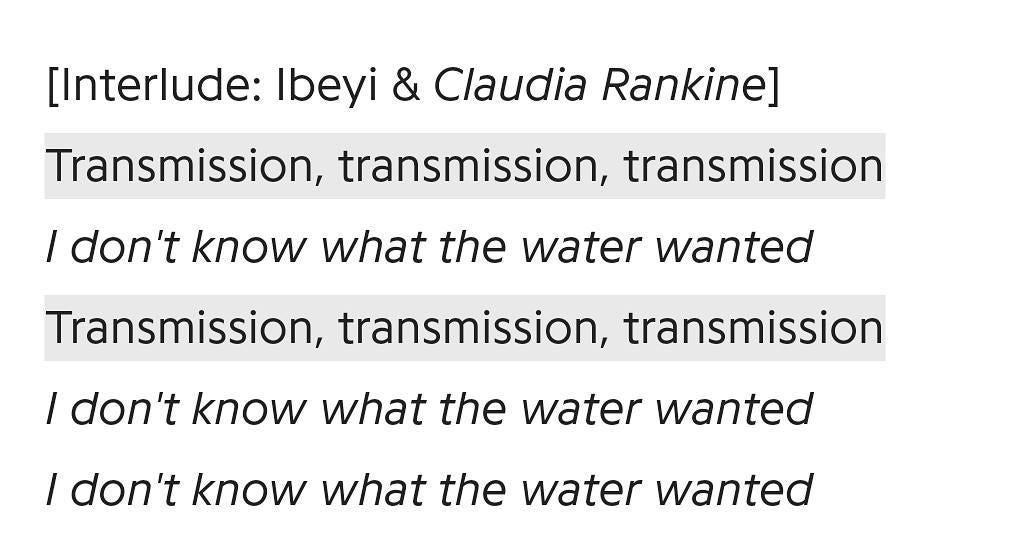
Learning what the water wanted. Research notes and tabs below….
Read
“Universities as Political Battlegrounds, A Call for Courage,” Scholars For Social Justice, accessed June 13, 2025, https://www.scholarsforsocialjustice.com/universities-as-political-battlegrounds.
Clyde Woods, “Life After Death,” The Professional Geographer 54, no. 1 (February 1, 2002): 62–66, https://doi.org/10.1111/0033-0124.00315.
Patrick Rael, Eighty-Eight Years: The Long Death of Slavery in the United States, 1777–1865 (University of Georgia Press, 2015).
“Historic Census Undercount of Black Americans Robs Communities of Billions in Funding and Fair Political Representation | National Urban League,” accessed June 13, 2025, https://nul.org/news/historic-census-undercount-of-black-americans-robs-communities.
“Latino Is Not a Race,” Latino Policy & Politics Institute (blog), August 8, 2024, https://latino.ucla.edu/research/latino-is-not-a-race/.
Melissa M. Valle, “Let’s Talk About Race (in Latin@ Communities),” NACLA (blog), October 16, 2014, https://nacla.org/news/2014/10/16/let%E2%80%99s-talk-about-race-latin-communities.
Paola Nagovitch, “Afro-Latinos Fear Being Erased from next United States Census,” EL PAÍS English, June 14, 2024, https://english.elpais.com/usa/2024-06-14/afro-latinos-fear-being-erased-from-next-united-states-census.html.
Miriam Jimenez Román, “Africa’s Legacy in Mexico: What Is a Mexican?,” afrolatin@ forum, accessed June 14, 2025, https://www.afrolatinoforum.org/pensamientos-blog/africas-legacy-in-mexico-what-is-a-mexican
Miriam Jiménez Roman, “Introduction: Afro-Latino Reader,” January 1, 2010, https://doi.org/10.1215/9780822391319-002.
Christina Sharpe, Ordinary Notes (Farrar, Straus and Giroux, 2023).
“Alice Dunbar-Nelson,” Division of Historical and Cultural Affairs - State of Delaware (blog), accessed June 14, 2025, https://history.delaware.gov/lgbtq/alice-dunbar-nelson/.
Stephanie Y. Evans, Black Women in the Ivory Tower, 1850-1954: An Intellectual History (Gainesville: University Press of Florida, 2008).
Ntozake Shange, For Colored Girls Who Have Considered Suicide / When the Rainbow Is Enuf: With an Introduction by Bernardine Evaristo (Orion, 2025).
Bárbara Idalissee Abadía-Rexach, Afrofeminista: Raza y Mujer En Puerto Rico (Puerto Rico: Periodísta Editorial, 2025).
Arthur A. Schomburg, “The Negro Digs Up His Past,” in The New Negro : An Interpretation / Edited by Alain Locke ; Book Decoration and Portraits by Winold Reiss, ed. Alain Locke (New York: Albert and Charles Boni, 1925), http://archive.org/details/newnegrointerpre00unse.
Dixa Ramírez D’Oleo, “Mushrooms and Mischief: On Questions of Blackness,” Small Axe: A Caribbean Journal of Criticism 23, no. 2 (2) (July 1, 2019): 152–63, https://doi.org/10.1215/07990537-7703392.
“Puerto Rico: A U.S. Territory in Crisis | Council on Foreign Relations,” accessed March 7, 2025, https://www.cfr.org/backgrounder/puerto-rico-us-territory-crisis.
Mariah Espada, “Influencers, Developers, Crypto Currency Tycoons: How Puerto Ricans Are Fighting Back Against the Outsiders Using the Island as a Tax Haven,” TIME, April 16, 2021, https://time.com/5955629/puerto-rico-tax-haven-opposition/.
“Who Lives in New Orleans and Metro Parishes Now?,” The Data Center, accessed June 9, 2025, https://www.datacenterresearch.org/data-resources/who-lives-in-new-orleans-now/.
Philippe R. Girard, “War Unleashed: The Use of War Dogs During the Haitian War of Independence,” Napoleonica. La Revue 15, no. 3 (December 14, 2012): 80–105, https://doi.org/10.3917/napo.123.0080.
Lucille Clifton, Quilting : Poems, 1987-1990 (Brockport, N.Y. : BOA Editions, 1991), http://archive.org/details/quiltingpoems19800clif.
Tyler Pharr, “The Forgotten Stories of Black Women Weavers in America,” accessed June 14, 2025, https://vawaa.com/blog/the-forgotten-stories-of-black-women-weavers-in-america.
Elizabeth Shown Mills, “Documenting a Slave’s Birth, Parentage, and Origins (Marie Thérèse Coincoin, 1742-1816): A Test of ‘Oral History,’” National Genealogical Society Quarterly, 2008.
Regina Bradley, “Sounding the South / Souf,” Southern Cultures 27, no. 4 (2020), https://www.southerncultures.org/article/sounding-the-south-souf/.

Projects
“Dunbar. ‘Violets and Other Tales.,’” accessed June 14, 2025, https://louisiana-anthology.org/texts/dunbar/dunbar--violets.html#VIOLETS.
Watch
lagniappe
¿Y tu agüela aonde ejtá? — via
Ayé me dijite negro
Y hoy te boy a contejtá:
Mi mai se sienta en la sala.
¿Y tu agüela, aonde ejtá?
Yo tengo el pelo'e caíyo:
El tuyo ej seda namá;
Tu pai lo tiene bien lasio,
¿Y tu agüela, aonde ejtá?
Tu coló te salió blanco
Y la mejiya rosá;
Loj lábioj loj tiénej finoj . . .
¿Y tu agüela, aonde ejtá?
¿Disej que mi bemba ej grande
Y mi pasa colorá?
Pero dijme, por la binge,
¿Y tu agüela, aonde ejtá?
Como tu nena ej blanquita
La sacaj mucho a pasiá . . .
Y yo con ganae gritate
¿Y tu agüela, aonde ejtá?
A ti te gujta el fojtrote,
Y a mi brujca maniguá.
Tú te laj tiraj de blanco
¿Y tu agüela, aonde ejtá?
Erej blanquito enchapao
Que dentraj en sosiedá,
Temiendo que se conojca
La mamá de tu mamá.
Aquí el que no tiene dinga
Tiene mandinga . . ¡ja, ja!
Por eso yo te pregunto
¿Y tu agüela, aonde ejtá?
Ayé me dijite negro
Queriéndome abochoná.
Mi agüela sale a la sala,
Y la tuya oculta ajtá.
La pobre se ejtá muriendo
Al belse tan maltratá.
Que hajta tu perro le ladra
Si acaso a la sala ba.
¡Y bien que yo la conojco!
Se ñama siña Tatá . . .
Po'que ej prieta de a beldá.
* * *
Fortunato Vizcarrondo nació en Carolina en el año 1895