
research post 2025-09-27
Find the woman with the fish and then go from there

Visual archives of Black liquid life
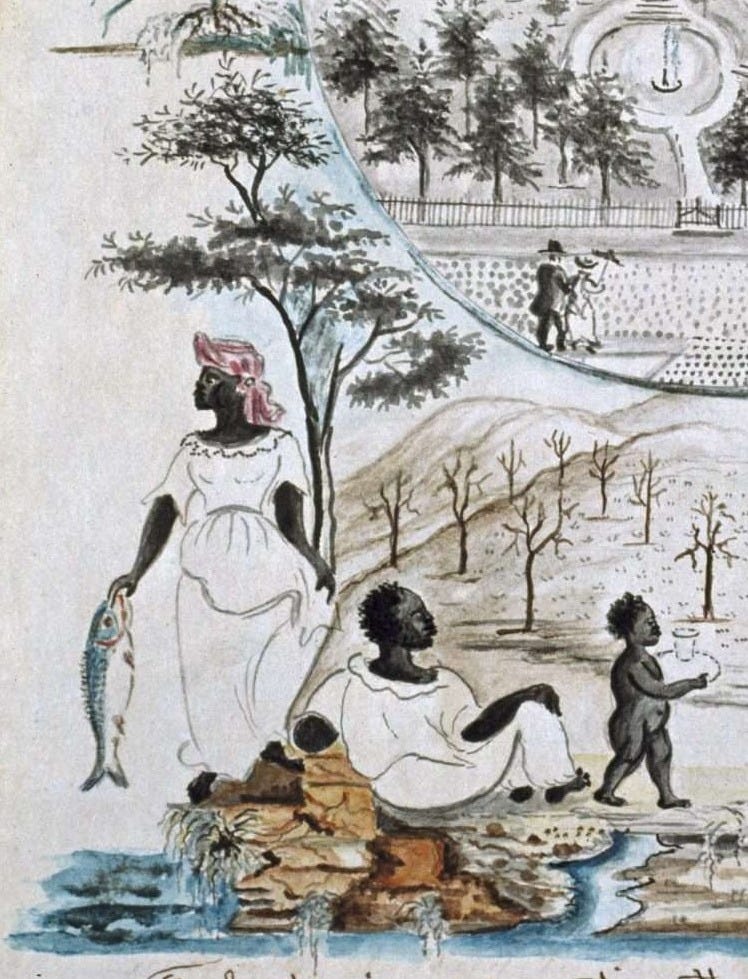
“The title page for Lewis Miller’s Sketchbook of Landscapes in the State of Virginia features a central oval portrait of Richmond’s Capitol Square and environs. Corn and tobacco frame the upper half of the view; beneath the cityscape are rural scenes, including a distant view of slaves hoeing the soil. In the foreground, both African Americans and whites enjoy the James River. The two groups are separated, though the children approach one another. Miller created this title page in 1853, but years later he wrote a postscript on the right margin of the page in which he described a tragic fire that occurred inside the Capitol in 1870. That conflagration killed more than fifty people and injured hundreds more.” — Discovery Virginia
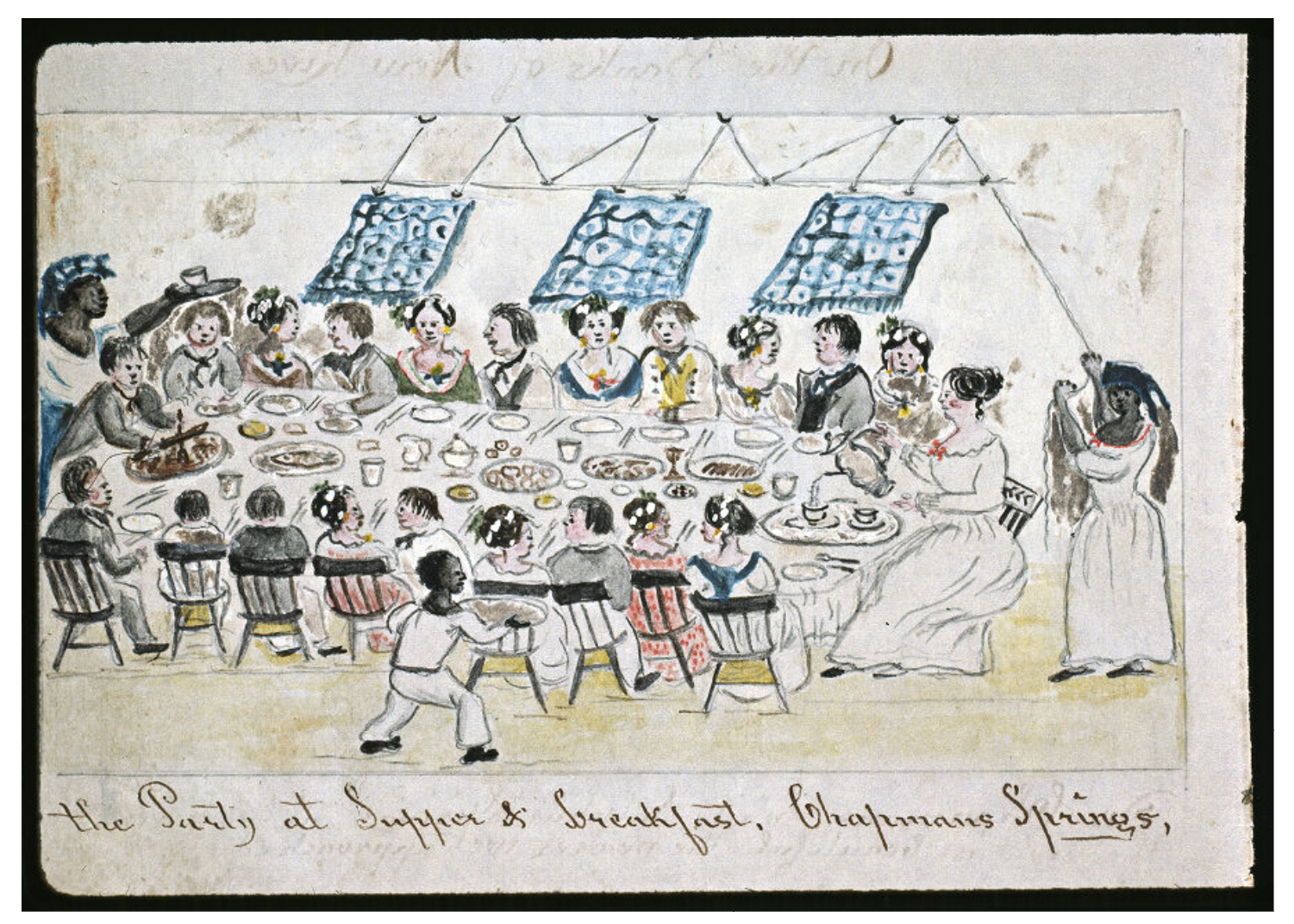
A watercolor drawing from Lewis Millers Sketchbook of Landscapes in the State of Virginia, depicts a dinner party for twenty-one people that was held in July 1853 at Chapmans Springs in Giles County. An enslaved woman and boy serve food and drink, while a third slave cools the guests by controlling the large overhead punkah fans. — Discovery Virginia
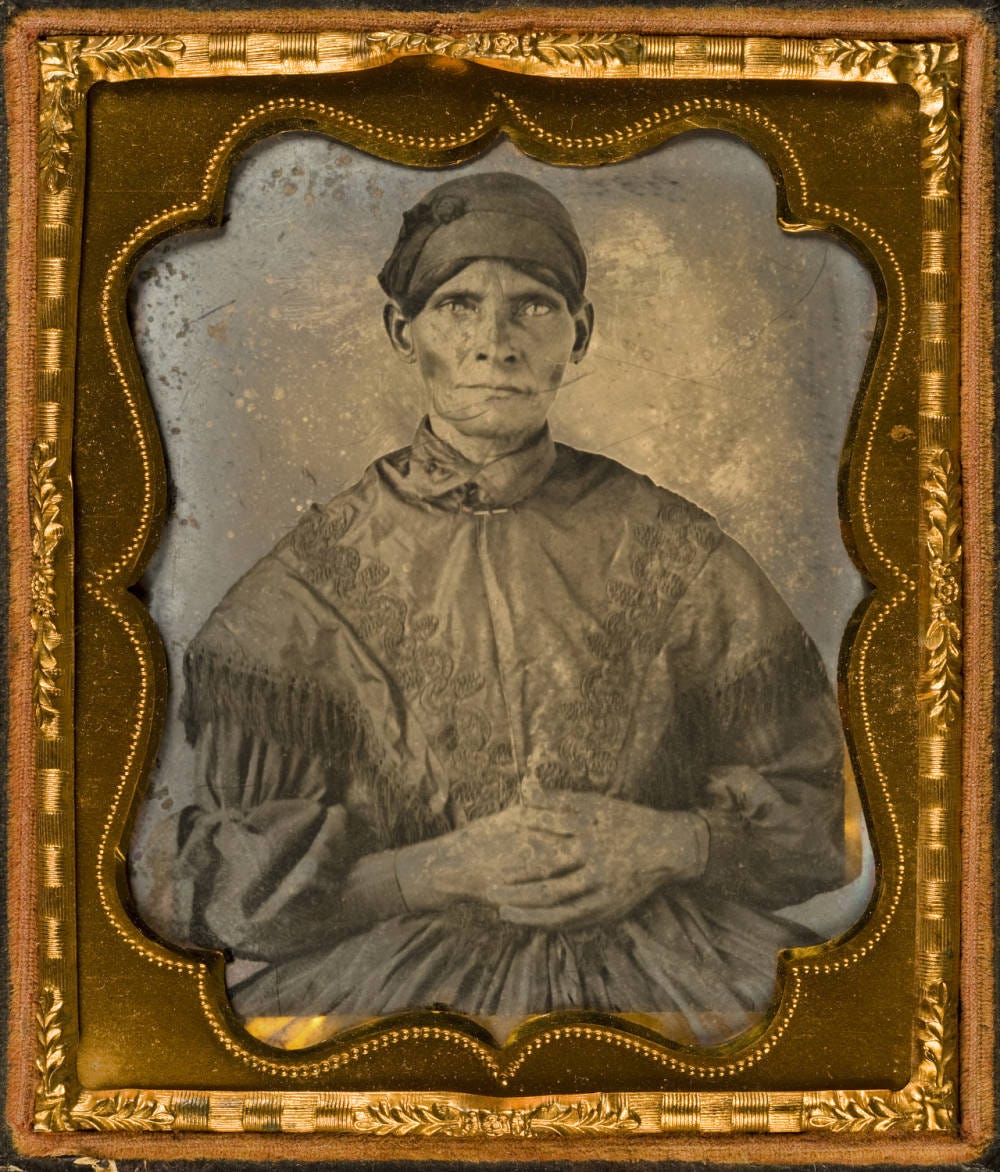
“Portrait of an African American woman, identified in back of case with an inscription that reads ‘’Della Lowe - sold apples in Marshall, Texas.’‘ She may have been an ex-slave or free black. Source: Lawrence T. Jones III.” - Southern Methodist University Libraries
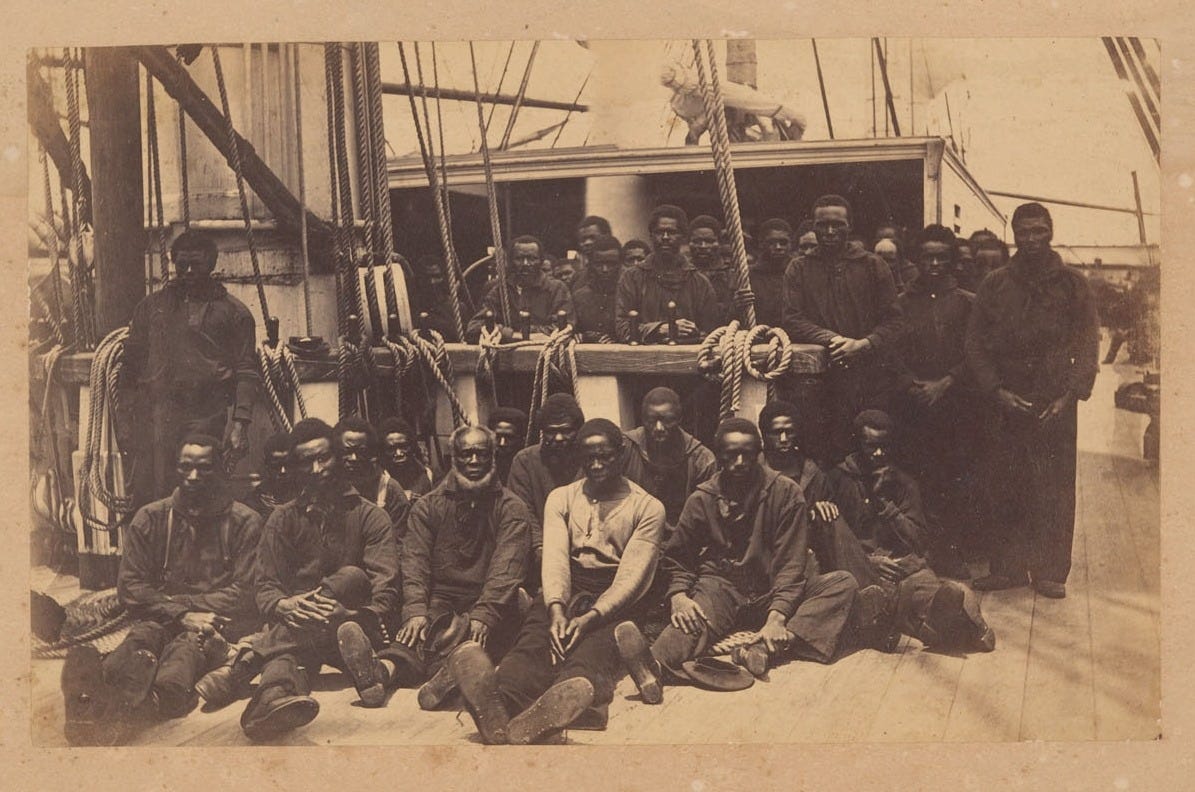
“In late fall 1861 or spring 1862 Henry P. Moore, a New Hampshire photographer, traveled from his home in Concord to make portraits of the Third New Hampshire Regiment in camp in Union-occupied South Carolina. While in residence, he made some of the earliest and most important Civil War photographs of slave life in the Deep South. Moore focused his camera on the changed lives of African Americans in the aftermath of the Union victory (navy and army) at the Battle of Port Royal, South Carolina, in November 1861. With the departure of their plantation owners, coastal plantation workers were no longer slaves but, before the Emancipation Proclamation, not yet free. They were considered contrabands, a term coined by Union General Benjamin Butler to describe their status as conscripted former slaves who had escaped the Confederacy. The U.S.S. Vermont served in the South Atlantic Blockading Squadron as a store and receiving ship, a hospital, and here as the backdrop for one of the war’s most revealing group portraits.” — Discovery Virginia
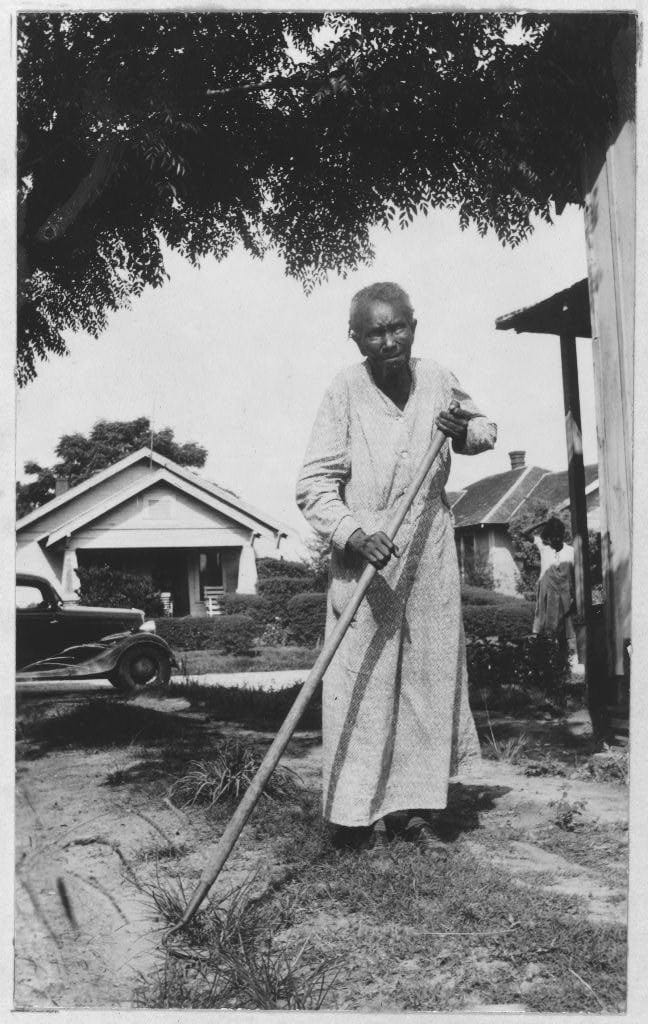
“According to Lou’s interview, she spent most of her childhood at Mary West’s side. She slept in a trundle bed next to Mary’s bed, and when Mary made trips to see her grandchildren in the “French settlement” (likely in Louisiana), she brought Lou along. Lou enjoyed those trips because she had an opportunity to play with other children. Mary, who Lou called a “good doctor,” treated Lou with home remedies when she was sick, and as doctors were scarce in rural Texas, other area families often sent for her when they needed medical care. In her interview she remembered that Mary was kind to her and bought her “pretty cotton stripe” dresses separate from the other enslaved African Americans who lived at the West’s place.
“In her interview, Lou noted the slave quarters consisted of log houses with a garden patch and remembered always having plenty to eat. A circuit-riding preacher came through once a month, and in between those visits, Mary West conducted religious services in her home for everyone on the West place. Lou’s primary work consisted of tending geese and turkeys, filling quilts, and carding, a step in making cloth. When she was physically punished, Lou recalled Mary usually swatted her on the leg with a “big, tall straw she gets out of the field or a wet towel.” The only harsh physical punishment Lou shared in her interview occurred when Richard West demanded she get eggs out of a nest that was under a corncrib. When she told him the nest was empty, he pulled her out from under the corncrib by her legs and whipped her, which outraged Mary. Richard said he whipped Lou because Mary spoiled her. Lou characterized Richard West’s treatment of the other enslaved laborers in positive terms but noted he changed during the Civil War and “start bein’ mean.” Fearing the South would lose the war and slavery would end, he started selling slaves to recoup his financial investment. In doing so, he split up enslaved families.” - Texas State Historical Association
Back in the present….
No Compromise, No Retreat!
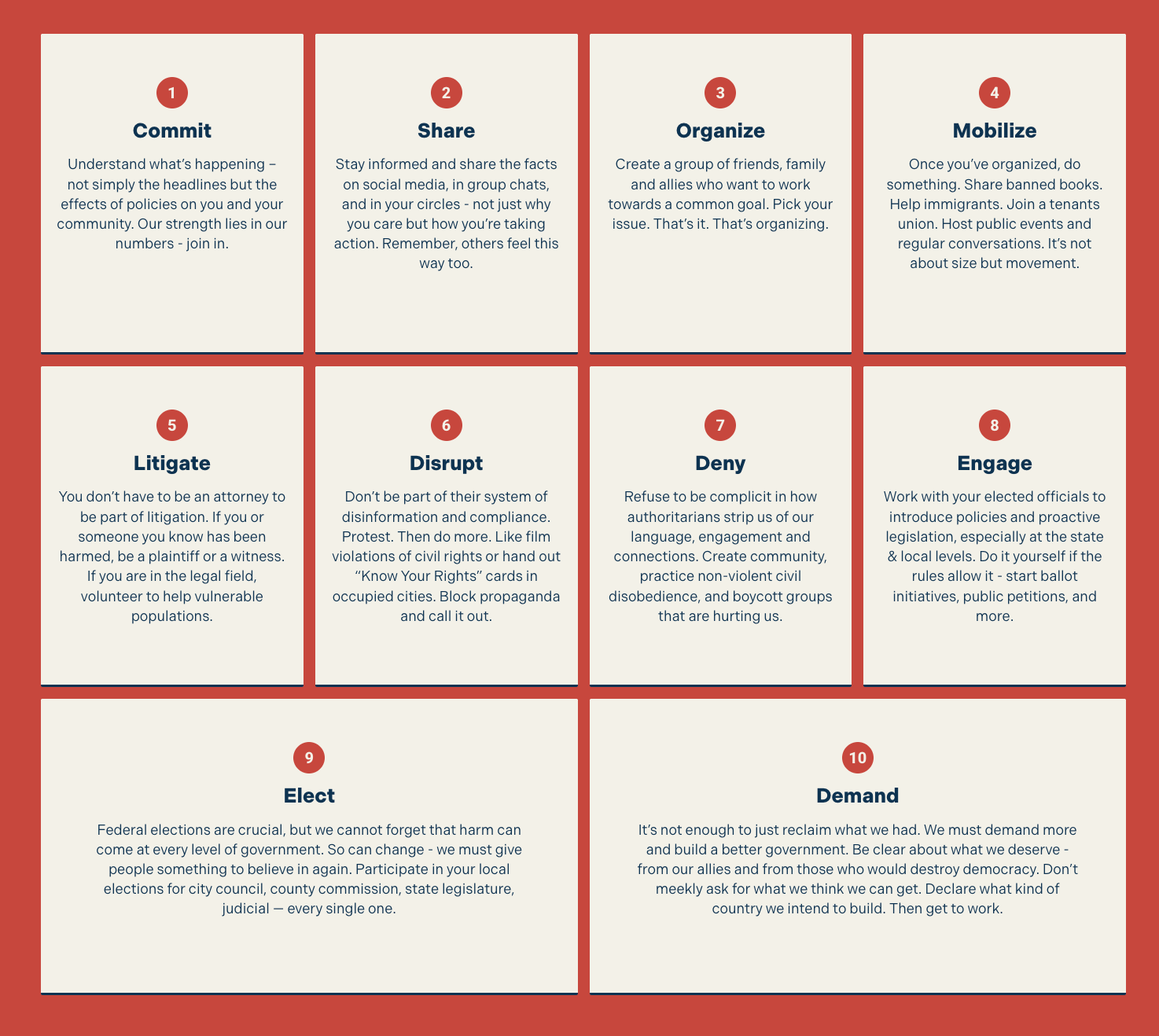
Stacey Abrams 10 Steps Campaign:
❤️🔥❤️🔥❤️🔥