
research post 2025-10-17
Loving Blackness hard all day, every way

This week we lost some real ones. Rest in peace and ancestral power to Miss Major, D’Angelo and Diane Keaton. Miss Major and D’Angelo, in particular, we lost and we knew they loved us and loved us hard.
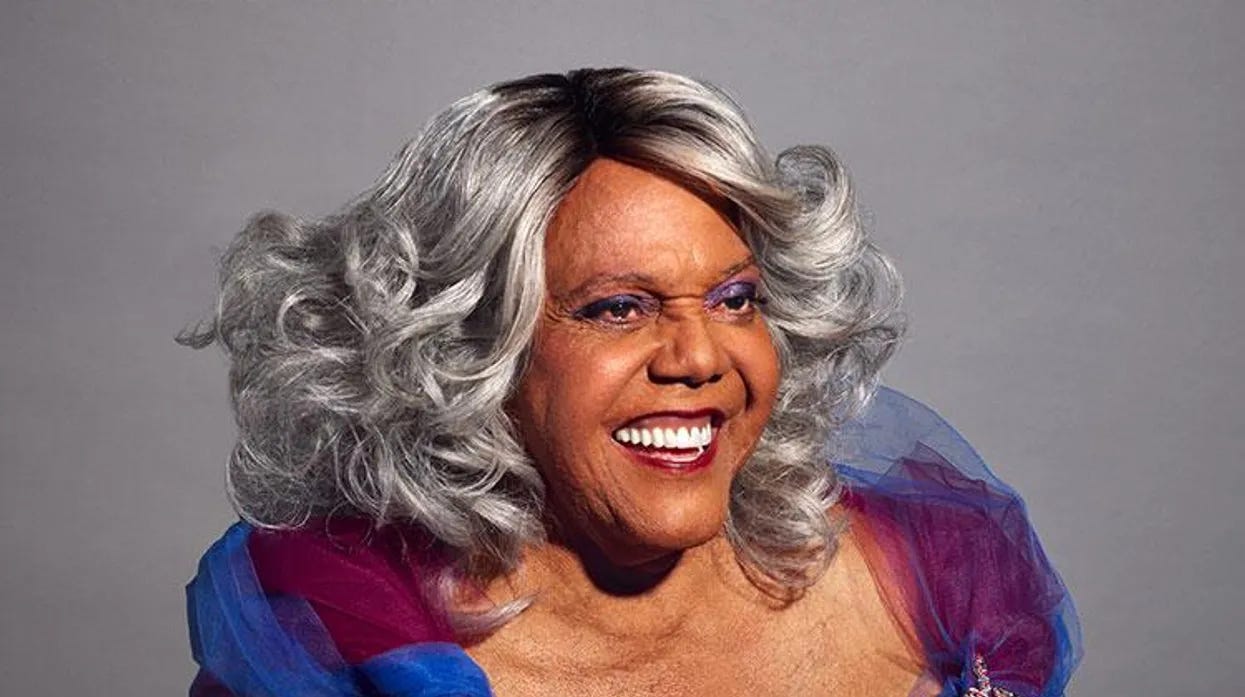
MAJOR!, the documentary about Miss Major’s life, is available, on demand, at VIMEO. It is a beautiful feature of an activist who lived in Black femme audacity and brilliance her entire life. Tourmaline, artist and director and activist, also created an animated film with Miss Major that highlights everyday resistance, the kitchen table, if you will, ways Miss Major “fights back and challenges the status quo” (Tourmaline).
I have been playing D’Angelo all week and I don’t plan to stop anytime soon. It is reconnecting parts of my DNA that the last nine months have tried to unscrew. But we won’t go down like that. We won’t.
Go down fighting, y’all. If you’re going to go down, go down and let it never be said that you didn’t love Black folks hard and in every single way possible.
Speaking of, tomorrow, October 18th, is No Kings Day. Scholars for Social Justice is mobilizing and has information here. Get in where you fit in. And if not there, get in somewhere. Be safe, wherever you are. Kelly Hayes newsletter on how Rogers Park (my old stomping ground, years ago, once upon a baby JMJ!) fought against ICE is a lesson in practice, patience, rehearsal and care for who can show up to the fight and who has to fight in other ways.

Reads, vids, affirmations and beatitudes and more below….
Reads
James Karst, “Buddy Bolden, the Father of Jazz, Left No Known Recorded Music, but His Home Still Stands in Central City,” Preservation Resource Center of New Orleans, April 23, 2019, https://prcno.org/buddy-bolden-father-jazz/.
Fatima Shaik, “Economy Hall, the ‘Carnegie Hall of Jazz,’” HNOC, First Draft, April 23, 2021, https://hnoc.org/publishing/first-draft/what-do-you-know-about-economy-hall-jazz-fest-tents-namesake-was-once-.
“Runaways – San Antonio | Lost Texas Roads,” Lost Texas Roads, n.d., accessed October 6, 2025, https://losttexasroads.com/history/people/runaways-san-antonio/.
“Louisiana: Converging Cultures,” The Searchable Museum, accessed October 6, 2025, https://www.searchablemuseum.com/louisiana-converging-cultures/.
shea howell, “City Values — The James and Grace Lee Boggs Center,” Boggs Center Blog, n.d., accessed October 17, 2025, https://www.boggscenter.org/thinking-for-ourselves/fyor0jutvihq99r2789zv2l91tj10r.
Jim Logan, “The Forever Scholar: American Association of Geographers Honors the Late Clyde Woods,” The Current, February 22, 2022, https://news.ucsb.edu/2022/020551/forever-scholar.
Frederick Joseph, “D’Angelo Gave Us Back to Ourselves,” Substack newsletter, In Retrospect, October 15, 2025,

Watch
45 Years of Kitchen Table: Women of Color Press, Black Women Radicals, 2025,
Black Natchez, from the Ed Pincus Film Collection at the Amistad Research Center (view at: https://louisianadigitallibrary.org/islandora/object/amistad-pie%3Acollection)
Black Natchez (1967) charts early attempts to organize and register Black voters and the formation of a self defense group in the Black community. In 1965, filmmaker Ed Pincus and David Neuman spent ten weeks in Natchez, Mississippi, filming the lives of ordinary people with unedited coverage of public and private civil rights organizational meetings, street demonstrations, and contests of power between young militants and the old guard, as well as secret meetings of African American self-defense organizations and interaction among the Black community. During this period, George Metcalfe, the recently elected president of the local branch of the NAACP, was bombed in his car leaving his job at the Armstong Tire Plant. In the week that followed, the African American community, along with local and national civil rights activists, gathered to address the problem. Pincus captured the fallout and general public sentiment following the event. The film is a genuine, often candid, portrayal of a community in a time of turmoil. At times, Pincus and his partner Neuman, turn the camera on an individual and interview him. Interviewees range from prominent civil rights leaders, including Charles Evers, to more representative residents, and they are asked to express their thoughts and feelings about racial tensions and violence in the city. The film also chronicles the tensions between the NAACP and the Mississippi Freedom Democratic Party, both of which were operating in Natchez.
Affirmations and Beatitudes
We shall seduce
We shall refuse to “evacuate” ourselves from our own lives
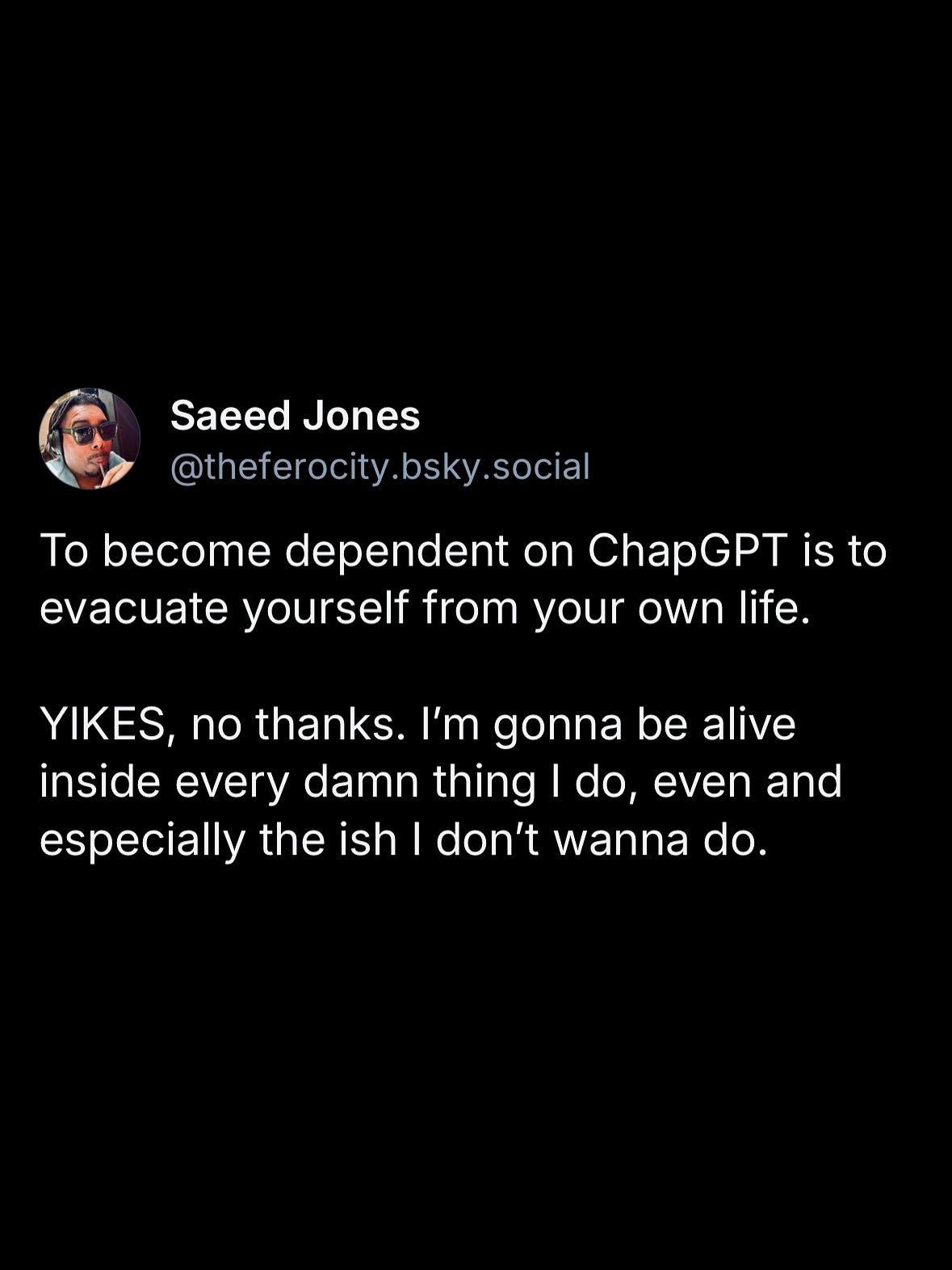
We shall fight for the future
We shall honor the analog
We shall remain grounded in the journeys of our ancestors
Wednesdays: Office Hours on Substack Live

This week, no surprise, we reflected on D’Angelo, ad we did another walk through the JMJ library for texts on Black culture and Black life. See below for the roundup and a few clips of the conversation.
Join us at the table next Wednesday!
After Work Drinks: Black Culture Edition

Thank you to those who joined the live (special love to Schuyler Esprit, Randelle Lenoir, and Kai Minosh Pyle).
Lives and post-live videos are still only for paid subscribers, something like a limited preview, just for y’all, of something wild and raw that I am still trying out. I am grateful for your support, patience, and generosity in these times of cruelty and hyper critique. Let’s keep having fun with this together.