
research post 2026 June 06
You can take the girl out of Chicago but.....

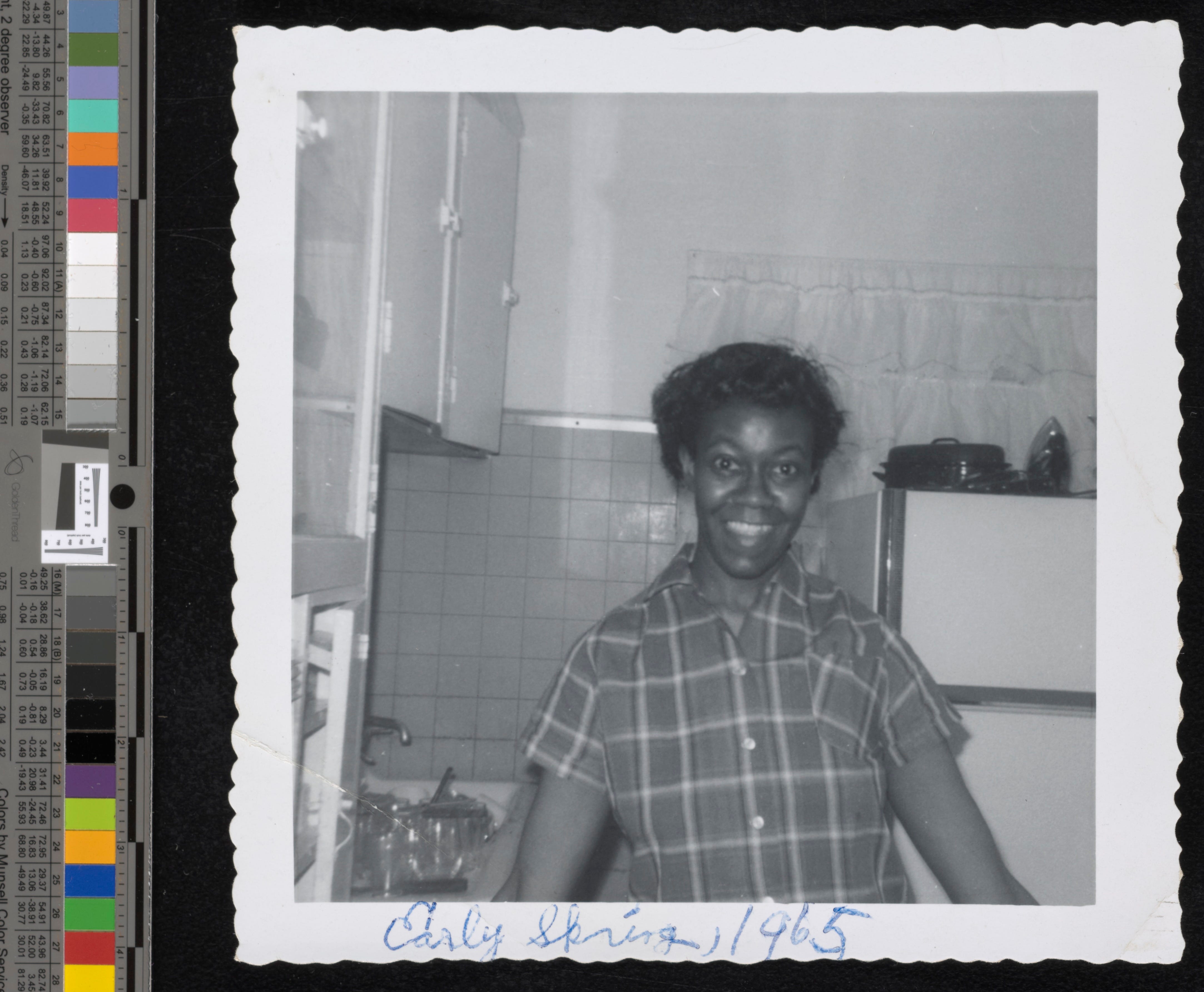
Settling into summer, closing the circle on a few things, starting new ones, cooking up a new community offering (projected: July/August 2026) and putting a lot of words on paper. A lot lot. June also means a turn back to the land of women, the land of SkyBabies, the sacred work of grief and living in spite of. But mostly, it means some peace, lots of listening, and a chance to slide back into my own skin. The book I am writing—about history, about family, about empire—requires me to be present in ways I never imagined. Trying to honor that work.
Tomorrow is Gwendolyn Brooks birthday. Rest in peace, fellow child of Chicago.
Research things below…..
Listen
Holly Baker and Julian Chambliss, hosts, 403 - Cheryl Wall and Eatonville, Zora Neale Hurston, and Transformation, January 1, 2019, https://stars.library.ucf.edu/everytonguegottoconfess/3.
Reads
Jo Banner, “Nothing Is Ever Black and White on a Plantation,” The Lens, June 3, 2025, https://thelensnola.org/2025/06/03/nothing-is-ever-black-and-white-on-a-plantation/.
Pema Levy, “The Roberts Court Takes a Page from Plessy v. Ferguson,” Politics, Mother Jones, n.d., accessed May 13, 2026, https://www.motherjones.com/politics/2026/05/supreme-court-callais-louisiana-plessy-ferguson/;
Brook Thomas, Plessy v. Ferguson : A Brief History with Documents, with Internet Archive (Boston : Bedford Books, 1997), http://archive.org/details/plessyvfergusonb00thom.
Shannon Dosemagen, “Holding Ground: Climate Change, System Collapse, and Home in New Orleans,” Southern Cultures 32, no. 1 (2026): 104–17.
Panel Discusses Sale of Slaves in Louisiana by University in 1838 | Jefferson City News-Tribune, January 2, 2017, https://www.newstribune.com/news/2017/jan/02/panel-discusses-sale-slaves-louisiana-university-1/.
“Louisiana v. Callais,” Legal Defense Fund, n.d., accessed June 6, 2026, https://www.naacpldf.org/case-issue/louisiana-v-callais/.
“On Water, Salt, Whales, and the Black Atlantics,” THE FUNAMBULIST MAGAZINE, December 14, 2021, https://thefunambulist.net/magazine/the-ocean/on-water-salt-whales-and-the-black-atlantics.
Richard Campanella, “Arpents, Ligas, and Acres,” 64 Parishes, March 1, 2016, https://64parishes.org/arpents-ligas-and-acres.
Black Girls in Archives, “Gold Jewelry: What Makes It Ghetto versus Classy?,” Substack newsletter, Black Girls in Archives, May 14, 2026,

Kristina Kay Robinson, “Power, Gris-Gris, and the Plurality of a Haunting: Maryam de Capita’s New World Order,” [Taller] Electric Marronage, March 22, 2021, https://www.electricmarronage.com/electricblog/2021/3/19/robinsoninterview.
Christina Thomas, “Toni Cade Bambara x Geraldine Wilson, A Friendship,” Diary of a Historian, March 26, 2020, https://diaryofahistorian.com/2020/03/26/toni-cade-bambara-x-geraldine-wilson-a-friendship/.
Heidi Renee Lewis and 2014, Feminists We Love: Toni Cade Bambara – The Feminist Wire, n.d., accessed June 6, 2026, https://thefeministwire.com/2014/03/revolution-begins-with-the-self/.
“Toni Cade Bambara | Georgia Writer’s Hall of Fame,” accessed June 6, 2026, https://www.georgiawritershalloffame.org/honorees/toni-cade-bambara.
“Toni Cade Bambara | Georgia Writer’s Hall of Fame,” accessed June 6, 2026, https://www.georgiawritershalloffame.org/honorees/toni-cade-bambara.
Heidi Renee Lewis, “An 86th Birthday Tribute to Toni Cade Bambara…from the Crates,” March 3, 2025, https://www.nwsa.org/blogs/nwsa-staff/2025/03/03/ToniCadeBambara.
Susan J. Ross, Photographs of Toni Cade Bambara & Friends – The Feminist Wire, n.d., accessed June 6, 2026, https://thefeministwire.com/2014/11/photographs-of-toni-cade-bambara/.
Haki R. Madhubuti, Bambara: What She Meant To Us/Me – The Feminist Wire, n.d., accessed June 6, 2026, https://thefeministwire.com/2014/11/cultures-of-masculinity/.
Gabrielle Dudley, She Puts Things In: Toni Morrison and the Legacy of Black Women Writers – Rose Library News, February 19, 2020, https://scholarblogs.emory.edu/marbl/2020/02/19/she-puts-things-in-toni-morrison-and-the-legacy-of-black-women-writers/.
Lauren McLeod Cramer, “Icons of Catastrophe: Diagramming Blackness in Until the Quiet Comes,” Liquid Blackness 4, no. 7 (2017): 142–68.
Katherine McKittrick, Demonic Grounds: Black Women and the Cartographies of Struggle U of Minnesota Press, 2006).
Allison M. Guess et al., “Reaching to Offer, Reaching to Accept: Collaboration and Cotheorizing,” American Quarterly 68, no. 2 (2016): 409–12.
Kristina Kay Robinson, “A Mass For Worlds Pre and Post: Preface to a 918 Volume (304 Children) Suicide Note or Letter to June Jordan on Jonestown Reply Written in New Orleans, 1,392, . . . Official Count,” Southern Cultures 31, no. 3 (2025): 120–23.
Documents
Economy Hall Cultural Family Photo Exhibit https://www.economyhall.com/descendants
Coutume de Paris, Rédigée Dans l’ordre Naturel de La Disposition de Ses Articles... Par Me Pierre Le Maistre,... Nouvelle Édition, Revuë et Augmentée de Plusieurs Notes... Par M*** [Germain-Antoine Guyot], Avocat Au Parlement (1741), https://gallica.bnf.fr/ark:/12148/bpt6k97771036.
Watch
CTA Connections, “We Are CTA” - Michele New, Rail Transit Operator, 2022, 00:52,
.
Projects
Save Black History saveblackhistory.org
For nearly six decades, the Amistad Research Center has stood as a vital cornerstone in preserving the rich cultural tapestry of minority groups across the United States and the African Diaspora. As one of the nation’s largest and most prestigious institutions of its kind, we house an unparalleled collection of over 15 million manuscripts, documents, letters, photographs, artwork, and more – a testament to the triumphs and struggles that have shaped our nation. From the original records of the courageous Freedom Ship Amistad, whose name we proudly carry, to the powerful works of artists like Jacob Lawrence and Elizabeth Catlett, our archives hold the evidence of stories that must not be lost.
But today, Amistad faces a critical juncture. To ensure our sustainability and expand our vital work of collecting, preserving, and providing public access to these invaluable historical assets, we have launched the SAVE BLACK HISTORY campaign with a goal of raising $1 million.
Just as Booker T. Washington and Julius Rosenwald forged a powerful partnership over a century ago to uplift communities through education, we now turn to you, our friends and allies, to help us secure the future of Black history. Your support will enable us to strengthen our collections, enhance accessibility for researchers and educators, and ensure that the stories held within our walls continue to inform and inspire future generations.
There is no story that the Amistad cannot tell, and there is no time to waste. Please join us in this crucial mission to SAVE BLACK HISTORY. No amount is too small to make a difference. Donate today and become a vital partner in preserving America’s story for the next generation – a generation in search of the truth.
Who Owns Black Data? wobd.blackbeyonddata.org
In this conference series, we propose to gather a distinguished group of scholars, librarians, and archivists from the Americas and Africa to discuss, elucidate, and provide public answers to the question: who owns and controls the Black historical and cultural record? That question suggests a troubling answer as soon as we pose it. That answer is whispered in the halls of academia and once in a while it surfaces in our writings and conferences. That answer also prompts us to ask other important questions which we hope to address in our conference series: How did we end up here? How do we answer the question of ownership and control in the context of today’s hybrid record, both analog and digital? What can and should we do going forward? Can we tie the question of control over our material inheritance to the movement for reparations for colonial harms and the evils of the trans-Atlantic slave trade? Should Black stakeholders be guaranteed a seat at the decision-making table in matters of the historical and cultural record of Black people? What happens when data about Black people and historical figures is created or curated by people who are not Black, as is the case of many, if not most important sources from the early modern period until the present? What further implications should we consider when that data is commodified, monetized or used as leverage within current regimes of private property? How do we begin to connect these questions to the role that ownership has played in Black History?
Visiones del Caribe https://visionesdelcaribe.org/about
At Visiones del Caribe, our mission is to cultivate a deep understanding and appreciation of the Caribbean as a multifaceted geographic and cultural region, enriched by its diverse communities. We aim to provide educational resources and experiences that encourage participants to explore and reflect on the complex meanings embedded within the Caribbean. Through engagement with a curated selection of cartographic and literary works, including maps, atlases, travel diaries, stories, and poetry, our project fosters insights into the rich history, literature, and geography of the Caribbean basin. By promoting knowledge and empathy, Visiones del Caribe strives to inspire curiosity, critical thinking, and cross-cultural appreciation among participants from all backgrounds.
CB-Essay https://collectionbuilder.github.io/cb-essay/
CB-Essay is a free, open source publishing framework that lets you write with, on, and for the web while keeping complete control over how your work appears online and in print.
Leona Tate: Integrating McDonogh 19 Elementary School https://neworleanshistorical.org/items/show/1625
Tate’s primary objectives in preserving the McDonogh No. 19 building are to create a permanent memorial site and exhibition dedicated to the McDonogh Three and the integration of New Orleans Public Schools; curate engaging programs that will attract visitors and address the needs of the community; and stimulate the local economy of the Lower 9th Ward. Tate wishes for all who enter the center to leave with an overall understanding of the importance of the events of November 14, 1960, and McDonogh Three’s contribution to the Civil Rights Movement and the possibilities for the further advancement of African Americans. Tate feels that there is more work to be done, as segregation has taken on new appearances such as restructuring school districts by creating tiered systems that greatly disadvantage poor African American New Orleanians. (10)
Affirmations and Beatitudes
“We are not the descendants of slaves, we are the descendants of human beings.”
French lawmakers just voted to abolish a colonial slavery law 341 years after it was passed. The law was created by the French monarchy to regulate slavery in the 17th and 18th centuries.
“Today the House passed SB 121, the racist voting map authored by Sen. Jay Morris. It now goes back to the Senate for approval of an amendment. We packed the gallery to make our opposition known just as we have for weeks on end. Despite the refusal of lawmakers to listen to Louisianans, we will continue to watch them and fight back. This fight is just getting started.”
“Yesterday a very important water ceremony took place in preparation for the opening of our traveling exhibition “In Slavery’s Wake” tomorrow at the Iziko South African National Gallery (@izikomuseumssa) in South Africa. The ceremony took place near the wreckage of the São José slave shipwreck. Following the conclusion of a 10-year loan to our museum, wooden artifacts, including ship timber, from the São José slave shipwreck will return home to South Africa for long-term conservation and continued stewardship. This moment marks an important milestone in with the work being done through our Slave Wrecks Project (SWP). Using maritime archaeology, historical research, and the study of sunken slave ships, the Slave Wrecks Project takes a distinct approach to the study of global African enslavement and the history of the African Diaspora.”
Quid Nunc owner Nancy Blackwell speaks with Baltimore printmaker and MICA graduate Sandman (@sandman.psd ) about the work featured in their Scout Art Fair booth, their evolving artistic practice, and Baltimore’s art scene.
SUPA DUPA FLY