
research post 2026 June 12
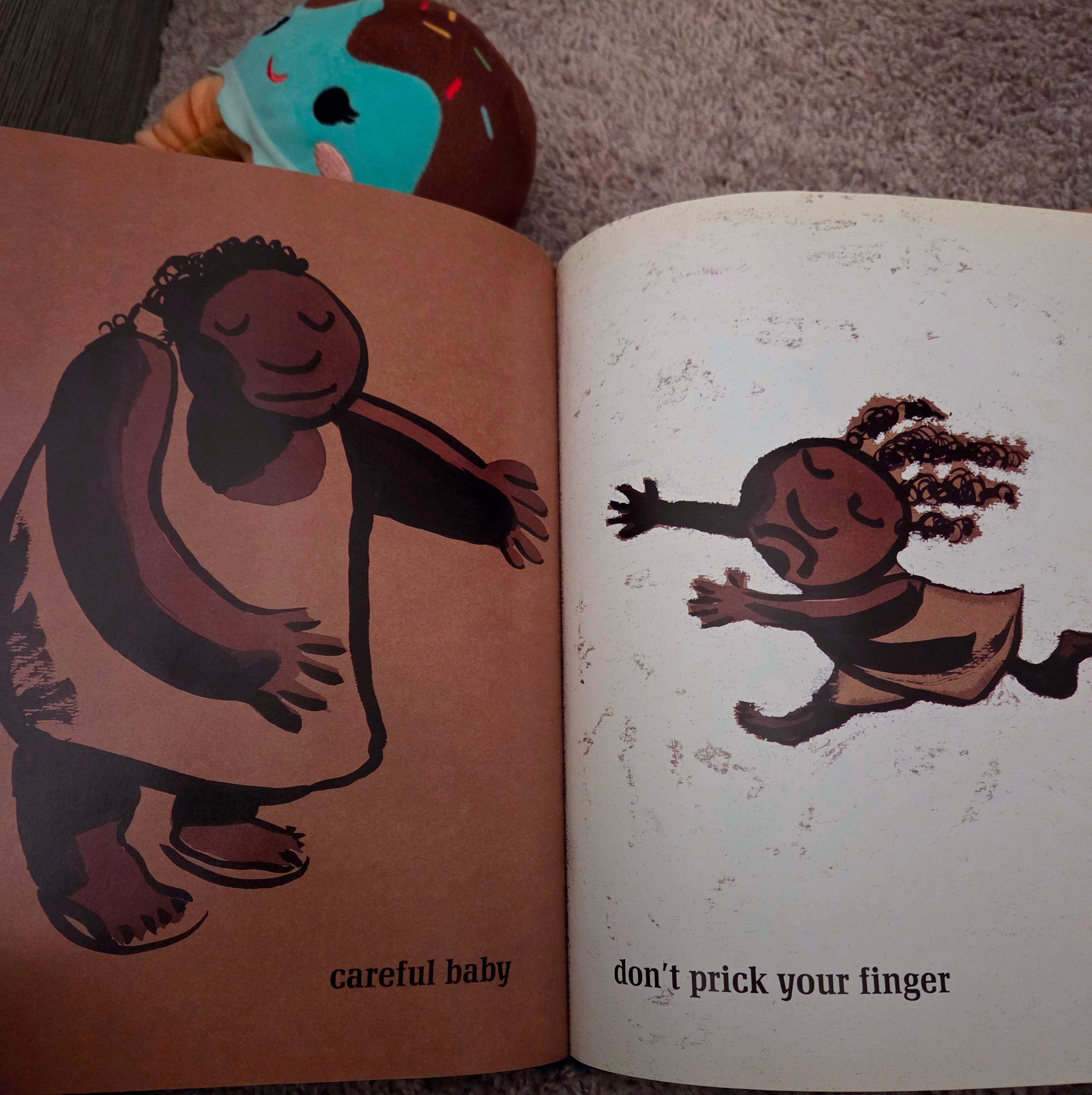
Did you know Nikki Giovanni wrote children's books? Plus a bonus for the coffee and groceries crew

Reads
Gary R. Mormino, “Florida Slave Narratives,” The Florida Historical Quarterly 66, no. 4 (1988): 399–419.
Ronnie W. Clayton, “The Federal Writers’ Project for Blacks in Louisiana,” Louisiana History: The Journal of the Louisiana Historical Association 19, no. 3 (1978): 327–35.
Marcus B. Christian, The History of the Negro in Louisiana. Unpublished. Negro Federal. Writers Project at Dillard University.
Jacquelyn Dowd Hall, “The Long Civil Rights Movement and the Political Uses of the Past,” The Journal of American History 91, no. 4 (2005): 1233–63, https://doi.org/10.2307/3660172.
“Judge J.H. Ferguson Declares the Separate Car Act Constitutional in 1892,” The Times-Picayune (New Orleans, Louisiana), November 19, 1892.
Stephanie M. H. Camp, Closer to Freedom: Enslaved Women and Everyday Resistance in the Plantation South (Chapel Hill: The University of North Carolina Press, 2004).
Julie Thompson Klein, Interdisciplining Digital Humanities: Boundary Work in an Emerging Field (University of Michigan Press, 2015).
Ifeoma Kiddoe Nwankwo, “Insider and Outsider, Black and American: Rethinking Zora Neale Hurston’s Caribbean Ethnography,” Radical History Review 2003, no. 87 (2003): 49–77.
Daphne A. Brooks, “‘ Sister, Can You Line It Out?’: Zora Neale Hurston and the Sound of Angular Black Womanhood,” Amerikastudien/American Studies, 2010, 617–27.
Alexandra T. Vazquez, The Florida Room (Duke University Press, 2022).
Deborah Willis, The Black Civil War Soldier: A Visual History of Conflict and Citizenship (NYU Press, 2021).
Violet Harrington Bryan and Brenda Marie Osbey, “An Interview With Brenda Marie Osbey,” The Mississippi Quarterly 40, no. 1 (1986): 33–45.
Sara E. Johnson, Encyclopédie Noire: The Making of Moreau de Saint-Méry’s Intellectual World (UNC Press Books, 2023).
Farah Jasmine Griffin, “Toni Cade Bambara: Free to Be Anywhere in the Universe,” Callaloo 19, no. 2 (1996): 229–31.
Toni Cade Bambara, The Black Woman: An Anthology (New York: Simon and Schuster, 2010).
Task Force on Slavery, Segregation, and Racial Injustice (Rice University, 2021)
“Sylvanie F. Williams 1896,” Wilkes-Barre Times Leader (Wilkes-Barre, Pennsylvania), November 5, 1896.
Kristi Branham and Kelly L. Reames, eds., Navigating Women’s Friendships in American Literature and Culture, American Literature Readings in the 21st Century (Springer International Publishing, 2023), https://doi.org/10.1007/978-3-031-08003-6.
Cate Płyś, “THIS CRAZY DAY IN 1972: Did Gwendolyn Brooks Inspire ‘Sylvia’?,” Substack newsletter, Roseland, Chicago: 1972, February 11, 2023,

.
“Black History Month: Gwendolyn Brooks - English | Colorado State University,” English, February 8, 2017, https://english.colostate.edu/news/black-history-month-gwendolyn-brooks/.
The Writer Who Changed the Future: On Gwendolyn Brooks - Beltway Poetry QuarterlyBeltway Poetry Quarterly, n.d., accessed June 12, 2026, https://www.beltwaypoetry.com/changed-the-future/.
“Gwendolyn Brooks: A Chicago Legacy,” The Poetry Foundation, accessed June 12, 2026, https://www.poetryfoundation.org/collections/160105/gwendolyn-brooks.
Watch
Projects
Gwendolyn Brooks Digital Archive [Link]
The literary archives of Gwendolyn Brooks (1917-2000) are part of the Rare Book & Manuscript Library. Ms. Brooks was an Illinois Poet Laureate as well as the first Black writer to win the Pulitzer Prize. The collection is comprehensive and spans more than half a century. It includes Ms. Brooks’ youthful poetry and prose, scrapbooks of pieces she published as a young woman, and extensive correspondence with a significant roster of other writers. The correspondence section alone has more than 100 boxes filled with letters, envelopes, and other items that were sent to and by Ms. Brooks. Also in the collection are manuscript drafts and proofs, especially material from after she left mainstream commercial publishing to produce her works with small presses and Black-owned imprints.
VOICES FROM THE MISSISSIPPI RIVER WATERSHED: A collaboration of the Neighborhood Story Project & Bvlbancha Liberation Radio
Voices from the Mississippi River Watershed is an audio series that connects Native stories of past and present with visions for Indigenous futures. The Neighborhood Story Project collaborated with Bvlbancha Liberation Ra- dio to amplify the poetry, realities, histories and dreams of possibilities of Indigenous People, scholars, artists and researchers from Bvlbancha | New Orleans to Bemidji, Minnesota, Bemijigamaag, “lake with crossing waters” near one of the many Mississippi River headwaters.
Read more about OCNOC here:

Affirmations and Beatitudes
I am on a social media break until July, but shout out to New York City which was all the way up this week. Signed, Your Chicago Cousin
For the Coffee and Groceries Crew
New book…who dis?