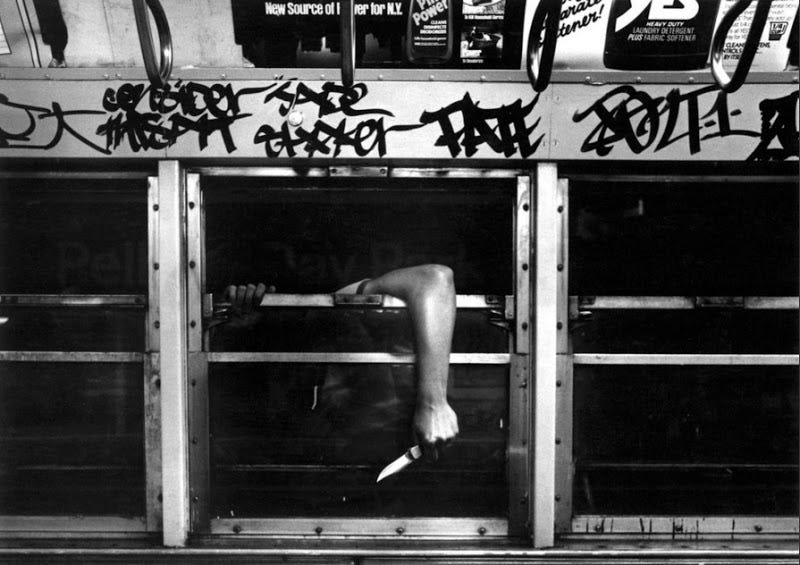
"together, we nursed you/don’t you dare/give up"
finding reasons in the work to go on and on and on
I have been thinking about these lines in ra malika imhotep’s poem A LOT.
“Together,
we nursed you
don’t you dare
give up.”
ra malika imhotep, “an armistice between my dead folks and my delusions,” (read here)
The last couple of weeks of this dying empire have been devastating. If you are anywhere in proximity to the humanities—as in you do art, culture, history, or literature in any way, shape or form—you have probably been touched by the seizure and decimation of the National Endowment for the Arts and the Institute of Museum and Library Services.
Last week, I watched as folks doing humanities work and folks charged with maintaining the work that humanists do received termination letters. Projects shuttered. People fired. Many of us live paycheck to paycheck. The thing about seeing life through screens, data, and abstraction is we can forget scale. Thousands of people fired really scales down to individuals fired really scales down to a single person who can no longer financially support the people they care for, who can no longer pay for their own or someone else’s hospital bills, who has felt the shock and confusion of having to reconfigure their own health, dreams, goals, who may have been holding the sky up for a world they are part of—because we are all world-builders, especially if the women of color—and that world is now coming apart.
Ways to help? Mutual aid, of course. Creating smaller, more local subsistence networks, yes. Creating smaller, more local projects, research goals, public humanities endeavors, of course.
But from the side of the humanities, where digging down into deeper knowledge and pushing up into the next levels of the profession both require massive and organized long-term planning, this is a bitter time. People and institutions set their two, three, five year plans on promises of support and resources. This is a bitter time.
Meanwhile, even as my peers mourn the loss of their jobs, and, with them, professional prospects and pathways, the university has become an even more fraught place—an impossible place, really—to express that anger, grief, rage, and bitterness. Universities are facing a clear and present threat to their survival that is actually a clear and present threat to freedom of speech and ideas. And also, as Shana Redmond pointed out in her piece, the universities have been making such wretched decisions and failing, with few exceptions, to protect their own community members, it is hard to know where to stand. The disappearances and students with canceled visas, which are running about one thousand now, put us squarely in a science fiction Netflix series.
(It actually isn’t hard to know where to stand. We stand with the people, the planet, and the oppressed.)
What is hard is explaining this to graduate students who have set their hopes on a life they imagined and are seeing it disappear what comes next.
What is hard is seeing undergraduates heartbroken by the inability of their universities to stand up for them, seeing students persecuted by their university for exercising their first Amendment rights.
What is hard is seeing faculty struggle with what to do and how to support and also manage the deluge of need, whether that is emotional, psychological, financial, professional or otherwise being placed at our doorstep—again, especially if you are a faculty member of color, a woman of color, a Black woman, a woman.
Which is to say—I haven’t been able to find the words for these newsletters because I have barely been able to keep up with myself. I set up Black Creative Worlds to find a pace that would allow us all to sit, to breathe, to receive, and we have managed to do that beautifully. And, also, the last few weeks, the deluge overwhelmed me and all I could do was sit, breathe, receive, and be in community in the seminar room. I could not find a pace that allowed me to do that online too.
So I chose. I chose in person over this newsletter. Because I am finite and so is time and if I had to choose to be somewhere, it would have to be in my flesh and not my screen.
But I missed y’all. And it made me think of the other ways that people are choosing and having to choose where to be, when to be, how to be. And how important grace is.
Building worlds is not easy. Building new worlds is beyond hard. It is devastating work. The choices we make every day, every hour, to be in place, to breathe, to smile instead of crying, to plant a seed instead of cutting a tree down, to find ways to be in person, in personal, in actual lived and physical reality with each other are important.
Scale and the algorithm may make us think we can always choose everyone, all the time, everywhere.
But I am a mother who knows that there are limits.

I don’t believe in binaries and I do believe in nuance. I study messy, complicated, lustful women who survived a time when being messy, complicated or lustful could get you drawn and quartered, hung until dead, set on fire, tortured and mutilated a thousand ways—and those are just the executioner options. Sometimes it could get you a bayonet in the throat or a club to the head until dead. Black women, we know death. We know the dead. And we know the living dead, the ones walking around with blood caked thighs, missing limbs, shaved heads. We know what happens when they know they can do what they want to you. We remember. The water in our bodies, in our blood, in our bones remembers (M. Jacqui Alexander; Toni Morrison; Olaf in Frozen).
Black women feel this time and it is a hurting time. Be gentle with us and with you.
We have two weeks of Black Creative Worlds left.
Tomorrow, we read about two Black women who have survived something unspoken and unspeakable, and then have to survive the almost mundane and obvious violence of broken kinship. That is the way I think of “The Office of Historical Corrections” by Danielle Evans. Evans will join us in seminar.
We also will be reading Afrofuturism, the book issued by the Smithsonian’s National Museum of African American History and Culture. Last week, along with the death of the NEH and the IMLS, an executive order was issued that specifically targeted and named NMAAHC and the Women’s History Museum for action. The order called for “RESTORING TRUTH AND SANITY TO AMERICAN HISTORY.”
As a historian of slavery and the African diaspora, I cannot tell you how unhinged that title is.
I will try to tell you. I need time though. This is also what my silence has been. Trying to figure out how to explain, to a reader who may have been conditioned to reject all things African, African diasporic, Black, Caribbean, and even broadly subaltern that the stories we tell about ourselves are the roadmap that we use to chart our desires, our kinships, our futures? Is it enough to say it like that?
I don’t know. But we will be reading about Afrofuturism, returning to the recipes that have worked, that still work to create the worlds we need to survive this world.
For those interested, in the coming days, the LifexCode substack will also be showcasing material from our projects that have received federal funding, from our partners who have received IMLS funding, and from across our ecosystem more broadly. Feel free to subscribe there (we don’t post much on our notes, but we do have a completely free newsletter) and follow along on our social media (IG is life_x_code). And on April 22nd, we will have our research celebration.
We keep rocking on. Ancestors said “we nursed you” so “don’t you dare give up.” My comrades sent me pictures of their children and grandchildren this weekend. My godson had his birthday this weekend. I made chocolate chip cookies for my babies this weekend. The flowers on my boveda are blooming. The okra seeds I planted are sprouting. Ancestors, the unborn, our children—none of them said we get to give up. My mothers bequeathed me care, discernment, love, and a sense of justice that is ratchet and raucous and has room for all. I did not inherit compliance. I inherited disobedience.
So we don’t dare give up. We do this.
Even when I am not on here, right on this newsletter, showing my work, I am doing it, somewhere.
And when I don’t see you, I’ll trust you are doing it too.


Thank you @lilcottonflower for your presence in poetry, your gift with words
"A bitter time." Yes, feeling this. Thank you for these important thoughts and words and for the world-building you do and that we must all keep practicing.