

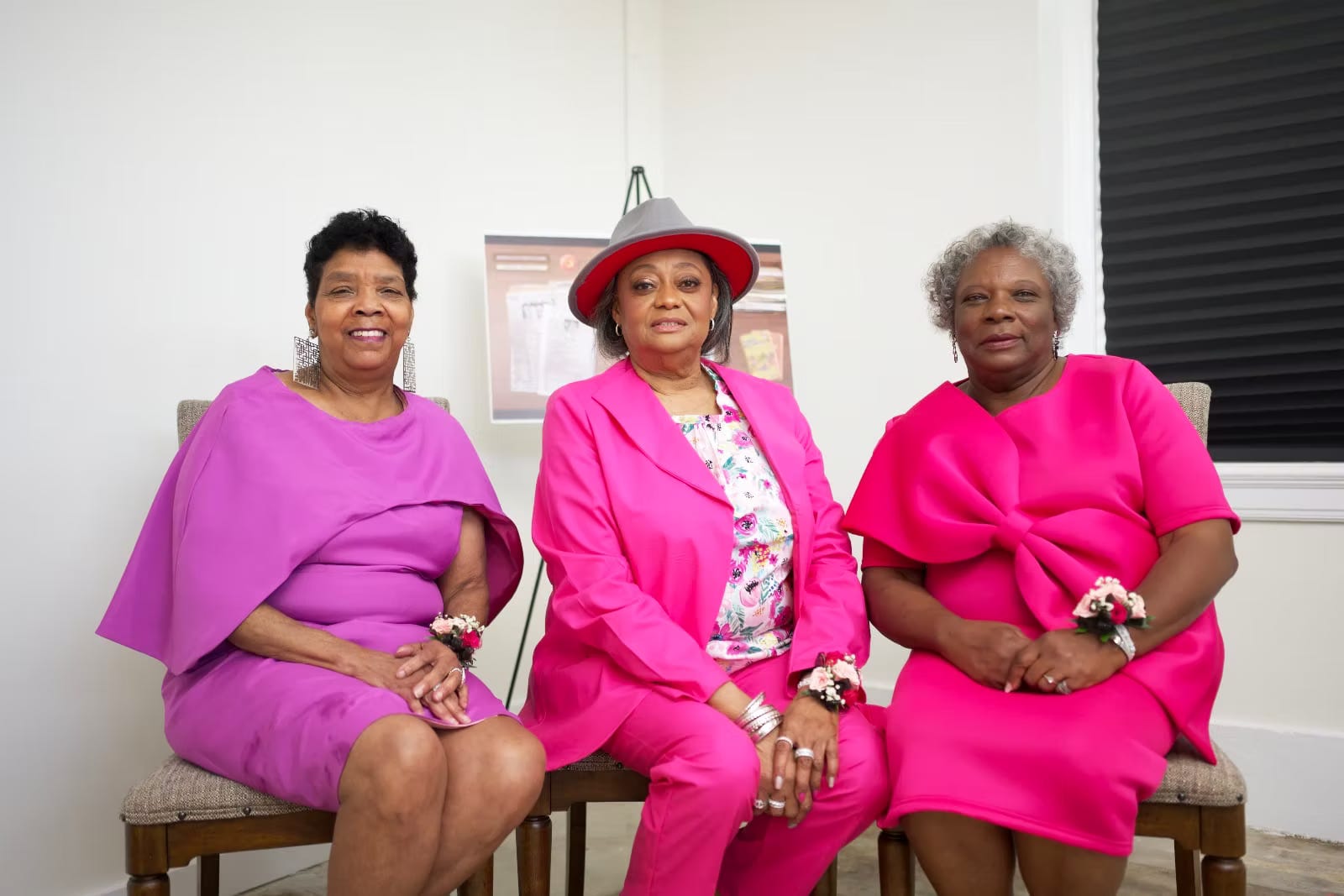
On April 29, 2026, as I sat down to write this twelfth and final offering for Stitch Open My Eyes, the U.S. Supreme Court handed down its decision on Louisiana v. Callais.
I planned to write about Homer Plessy.
It was in high school I first learned about Plessy v. Ferguson, the case of train segregation that made its way all the way to the Supreme Court. In the 90s, if you’d cornered me outside of the Loomis exit of the Racine Blue line stop (the end of the station usually without an agent so you needed a metro card or a token to enter or you jumped the turnstile and risked someone telling a teacher or your parents or both), I probably would have palmed my metro card (I never jumped turnstiles) and told you this:
plessyversusferguson made it so that Black people were separate but equal and it was eighteen ninety six and the Supreme Court (the highest law of the land) decided it and it was the rule until Martin Luther King had a dream and there was a bus boycott and Rosa Parks sat down and separate is never equal, of course, but until after Brown v. Board it was the law and led to Jim Crow where there were a lot of lynchings including Emmett Till (he was from Chicago, you know, he was just a boy) in Mississippi but I am glad that law got changed because now we can all live together and Black people are free but I still wonder about what happened during slavery to get us there also separate but equal is such a stupid thing to do why would a town pay twice for the same thing why not just have one water fountain instead of two?
I would have, of course, been more coherent in writing, after a few trips to the Chicago Public Library (Sulzer Regional Branch on Lincoln Ave) and if surrounded by emotional support stacks of books, including the twenty-plus volumes of the Encyclopedia Britannica my mother purchased for me and my sister to study from. Still, that would have been the gist of my social studies knowledge of Plessy—a court case marking the beginning of Jim Crow.
I did not listen well as a teenager. I took for granted that the knowledge I needed would be there when I wanted it. I didn’t grow up with Google, so I can’t really blame social or digital media for my hubris. I think I lived the intellectually privileged, desegregated life of many post-Civil Rights movement Chicago school kids. I assumed that Black history would always be there because MLK had a dream and I was the dream and since I was sitting in a magnet school classroom rubbing sweaty shoulders and ashy ankles with a handful of other Black Mexican, Asian, Jewish and Eastern European kids from across the city, hadn’t his dream become a reality?
Still, even then, I knew slavery was the poisonous root of all evil, coiled, cloaked and silenced. Even then, slavery was a question I knew I needed answers to.
And because slavery was a road I would keep walking down, towards, under, over and through, it didn’t take me long to find my way back to 1896.
Imagine my surprise when I realized behind plessyversusferguson lived a real man, Homer Plessy, and a real community of organizers, writers, spiritualists, journalists and politicians risking blood and bone on a radical vision of the future.
Between 1863 and 1896, Black people in the United States gained legal freedom, gained birthright citizenship, gained universal male suffrage, gained political representation through Black elected officials (the most elected officials, proportionally, up to then and since), gained access to public schools and public accommodations, and gained legal representation (trial by jury, public defenders, and the right to give testimony) in the courts of the land.
By 1868, Nathan Bedford Forrest, a Confederate war general whose viciousness could be seen as sociopathic by present-day standards, had founded the Ku Klux Klan in Tennessee. Despite the movement to take down Confederate monuments and commemorative names, a movement that hit fever pitch in 2015, he still has a state park named after him.
By 1877, newly elected President Rutherford B. Hayes had pulled federal troops out of the South in exchange for the electoral votes needed to secure his win.
That year is seen as the end of Reconstruction, but Black southerners refused to curl up and hide in their homes.
I grew up in Chicago, Illinois. Our state’s motto is “Land of Lincoln” and the mythos of the North as a land of freedom and escape from slavery and the Jim Crow South, is strong. But I grew up with a grandmother from Alabama who raised three boys in the middle of the Cabrini Green housing projects. Everything in my lineage told me Black southern women knew how to fight, how to abide, how to cajole, and how to survive. Over the course of my childhood, more than one friend moved “back down South” to Alabama, Mississippi, and Georgia. Atlanta became a popular destination by the 99s to the 2000s. Family reunions rolled through my classmates summer schedules, sending them to parks from Texas to South Carolina. We couldn’t afford to go to ours, though I pestered Granma and my uncles about attending every year. For solace, I looked at pictures my friends developed of themselves in family reunion tees and wondered what it must have been like for them to sink their feet into the soil of their homelands. I wanted that for me. And even though I missed the Freaknik era, I saw the same VHS tapes of camcorder recorded footage that every other Black kid my age did.
In other words, to us, the Black South was legendary, exciting, and defiant, maybe a little nastyinagoodway.
Seeing Black southerners as unworthy, lost, or lazy was never a consideration. Instead, what I couldn’t understand—again, slavery being a question I continued seeking answers to—is why the portrayal of Black people could be so pitiful on one side of 1865 and so heroic on the other?
If Black southerners could organize a boycott that brought down Jim Crow, why wouldn’t we have more stories of enslaved people doing the same thing a generation earlier?1 Did Black heroism just rise up from the red dust of the roads, or was it hard fought, hard won, forged and filched from the hands of Bull Connor and his ilk? Was the Black South an unnamed woman in a dusty apron in front of a crumbling cabin or Harriet Tubman? Was Rosa Parks magical or just mad? The two images—the slave and the superhero—formed a palimpsest in my mind that jarred and prickled, a high contrast photo set too high, too sharp, too jagged, too false.
College is where I met Homer Plessy, the man, and the Comité des Citoyens or Citizen’s Committee of New Orleans. By then, I’d already said yes to marrying the Crescent City, lived in a dorm room piled high with fresh stacks of McKeldin Library books and JSTor journal articles about slavery in Louisiana. By then, I wasn’t surprised to encounter the untold-unless-you-grew-up-in-the-city-or-were-the-child-of-Afro-Creoles story of Homer Plessy and the fight for Black life. Wasn’t surprised to learn Plessy’s story begins years before 1896.
Perhaps I can sum it up here better than my childhood self could:
In 1864, two years after the Union army occupied New Orleans, a Black man (”Afro-Creole” in ethnicity and culture) named Dr. Louis Charles Roudanez founded the La Tribune de la Nouvelle Orléans (the New Orleans Tribune), the first Black daily newspaper in the United States. Through the rolling shifts, wins, and violations of Reconstruction—despite Louisiana seeing some of the bloodiest white Confederate violence the South would see after the Civil War, including the Mechanics Institute Massacre in 1866 and the Colfax Riot of 1873, both of which effectively bookmarked the era of Radical Reconstruction—the New Orleans Tribune publicized a radical ethos authored by a politicized (largely masculine) bloc of the Black community of New Orleans. Their demands included universal suffrage, desegregated schools and accommodations, and reparations by offering land to those formerly enslaved. They sponsored a Freedmen’s Aid Association which promoted collective land ownership, a terrifying concept to white landowners then and a radical one today, but one that fit the communitarian ethos of Black freedpeople just fine.
The Tribune represented and publicized their political ideology in English and in French, a multi-lingual editorial strategy that reflected its transnational solidarities with republican France, as well as emancipated bondspeople in the Caribbean and Latin America. Basically, the first Black daily in the United States was a global, multi-lingual newspaper in the Black South with anti-imperial and anti-slavery goals. But by 1869, the Tribune folded, due to political repression in the form of threats and financial pressure. Still, the political ideals and community it represented did not.
So as former Confederates continued to carve back the rights Black Louisianans had died for, Black folks continued to fight back. One of those battles occurred in 1890, when the Comité des Citoyens (Citizens’ Committee) for the Annulment of Act No. 111, Commonly Known as the Separate Car Law as formed. As its name describes, the Comité des Citoyens organized themselves to fight back against a new state law requiring separate rail cars for Black and white citizens (yes, that means that for years before, the rail cars were integrated, as were schools and the city police force).
Plessy, in other words, did not just sit down and refuse to get up. His act of civil disobedience was a well organized attempt to trigger police and court action. He, like Rosa Parks, also wasn’t the first. Daniel Desdunes attempted to desegregate a train from New Orleans to Mobile, but the case never went to court. In 1892, Homer Plessy’s did. Plessy was so light-skinned he reportedly had to alert the agent that he was, in fact, Black, lending even more absurdity to the idea of separate but equal—which is still a stupid idea, but one that makes sense if what you are trying to do is grift and steal tax revenue from Black communities without representation or compensation, but that is another conversation. When Plessy let the conductor know who he was, he was arrested. Louisiana Supreme Court Judge John Fergusm ruled against Plessy, upholding the law under the premise that separate did not mean unequal.
After four years of cases and appeals, the Supreme Court agreed: 7 to 1, separate did not mean unequal, opening the way for segregation to shave resources and rights from Black communities across the country. The Comité disbanded, but their existence is an example of how Black organizing during slavery never stopped after slavery. Black southerners always had a bigger dream for what freedom meant and continue to fight, remain ready for a fight, and are steadily fought against despite having had the moral upper hand since 1865 (and before).
This is probably what I would say about Plessy now.
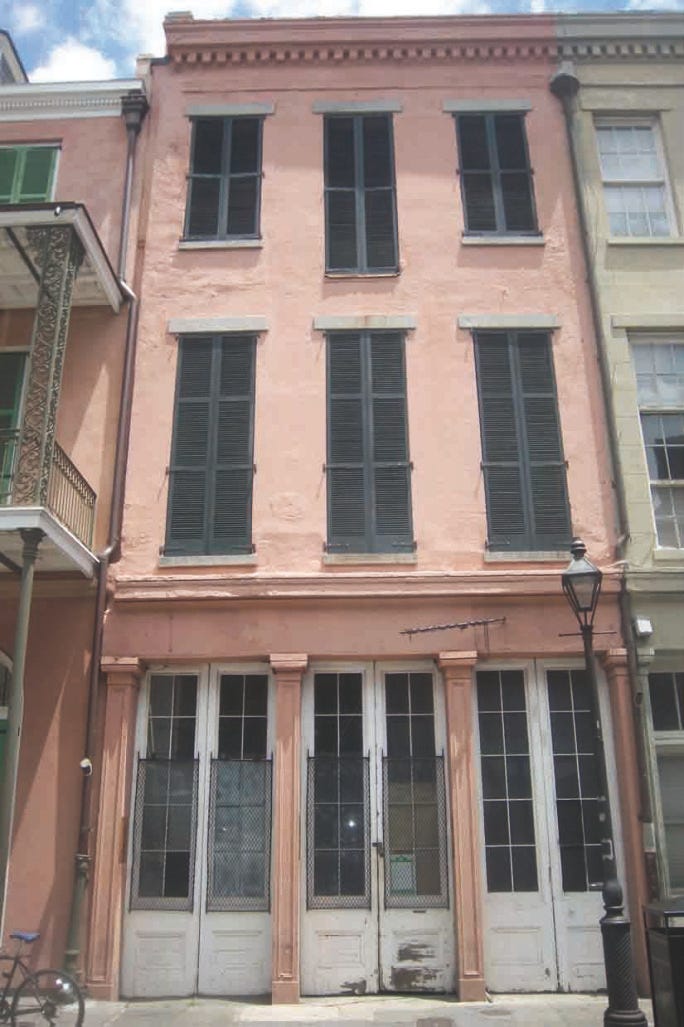
Mark Charles Roudané, a descendant of Louis Charles Roundanez, along with Mr. Leon Waters and the Louisiana Museum of African American History (LMAAH), has been instrumental in keeping the memory of the New Orleans Tribune alive—including having a plaque placed on the wall of the building that housed the newspaper offices in the French Quarter. He wrote this about the New Orleans Tribune and about Black organizing in New Orleans:
“How can it be that such dramatic resistance is largely an untold chapter of the American experience? How can it be that one can still stroll past the former offices of the Tribune and see no plaque, no recognition, no reminder? How can it be that tourists are guided through Saint Louis Cemetery No. 1 and not learn that Louis Charles Roudanez is buried right around the corner from Marie Laveau and Homer Plessy? Some scholars, perhaps thinking French-speaking free people of color unrepresentative of the black cause, have avoided the critical role they played. And, like so many seminal events that characterized the African-American struggle for freedom, little or no attention is given to the underlying story, the history is marginalized, and the public remains clueless.”2
Language does get in the way. The French issues of the New Orleans Tribune are notoriously radical and are currently being transcribed and translated by LMAAH. Published in English and French, the issues were bilingual but not identitcal, and a deeper look at the differences is exactly what Mr. Waters and the team are exploring.
But I am not convinced that language is the only or even the primary reason why the New Orleans Tribune, the Comité and Homer Plessy himself had been reduced to plessyversusferguson in the national imagination.
Instead, I’d guess that Plessy’s problem is the same problem that Rosa Parks had is the same problem that Black southern organizers and activists have had since emancipation is the same problem all Black people have which is it is hard to be seen as a person when you have spent centuries seen as a thing.
A political problem too big to solve so you are turned into fractions like three fifths. A thorn in the side of American democracy, too deep and ill-placed to scratch out with your own hands. A drug at the heart of American capitalism, white powder puffs of cotton as far as the eye can see, cheap labor (bound, convict leased or indentured), and these days, cheap and easy consumers and producers mined for culture, pimped out to apps slinging distraction and hallucinogenic Ai.
You cannot make a person into a thing. More important, Black people already know that better than anyone else.
The Black South is a truth serum that slices through the fugue state that is U.S. exceptionalism, Lost Cause boosterism, and white liberal apathy.
It took the Louisiana state legislature less than a month after Louisiana v. Callais to redraw the state maps. On May 29, 2026, the state passed S.B. 121 which eliminates an entire district of Black voters. More than one-third of the state is Black.
“If you could give us less than zero seats, you would.” Marshawn Camese stated point blank period in his testimony to state representatives.
“I went through something no child should go through to desegregate our state. And now, 65 years later, I’m watching as lawmakers attempt to go backwards and segregate us once again through disgraceful voting maps,” said Ms. Leona Tate, the last living member of the McDonough Three, the three little girls who joined Ruby Bridges in desegregating public schools in New Orleans. In 1960, Leona Tate, Tessie Prevost, and Gail Etienne walked into McDonough 19 past a screaming crowd of white onlookers. While Ruby Bridges is more widely known, Tate, Prevost, and Etienne are beloved in New Orleans and across Louisiana. In 2019, the Leona Tate Foundation purchased McDonough 19 (which closed after Katrina and never reopened), turning it into the TEP Center, a museum and monument to the civil rights struggle for equal and equitable education in New Orleans. Like a woman with a vision, the TEP Center also includes units of affordable housing for elders and infirm.
Since April, Tennessee, Georgia, Alabama, and Mississippi have all passed, proposed, or are planning to redraw Black voters out of their voting maps.
And since April, a coalition of organizations have taken up the following refrain: All roads lead through the South.
This offering is for the Black road that is the Black South and its fire of truth. It is for the roads, familial, communal, and genealogical that Homer Plessy walked when he stepped onto that first class train car at Press Street Station, in defiance of the law and on behalf of the Comité. It is for the little girls who walked into McDonough 19 avoiding spit, drowning out screams, with chins high. It is for the acts of refusal, subertfuge, and courage that we, those who are Black and those who conspire with us for freedom, remain in the tradition of, knowing we have done this before, knowing we have strategies to learn and relearn and implement. It is for what will be asked of us in the days ahead—all of us. Black in the South, Black in the North, Black in the West, Black abroad, Black expatriates, Black on the islands, Black and just discovered it because you opened a safe of documents in the house of your grandfather, Black and you speak many languages, Black and Indigenous on every continent, Black and churchy, Black and witchy, Black and dancing on tables, Black and middle finger to the wind, Black and curled up with two others, Black and waiting in the doctor’s office, Black and on a boat in the swamp, Black and angry, Black and drunk, Black and and.
This offering is not a map.3 It is the call and response, the marking and making of territory. Like the eleventh offering, it gives testimony. Like the tenth offering, I see you. Like the ninth offering, I hope you bear witness with me. Like the eight offering, we have a vision. Like the seventh offering, let that vision be on purpose. Like the sixth offering, let that purpose jump scale. Like the fifth offering, may we shed all delusions. Like the fourth offering, in shedding, let us see clearly. Like the third offering, in seeing clearly, may we prophecy. Like the second offering, may that prophecy send us back to fetch it. Like the first offering, may what we fetch return us to ourselves.
This offering, like all of the Stitch Open My Eyes offerings, like this history, is for you and for me, the girl I was, the unicorn you are. It is for the storytellers, the griots, the memory workers, the secret keepers, the guild guardians, the glamorous, all who read us, all who sit in the circle with us, all who listen and all who don’t. It is for the documents we have and the ones we lost and the ones never created.
It is for the five Black students who dropped the class after the first day. It is for the ones who remained.
It is for Black southerners who stay even when their Northern cousins ask them why they don’t just go. It is for the Northern cousins who come back despite empire telling them to abandon home. It is for my grandmother, her sons, my children, their Black South-born father and his kin who are now my kin, so now Georgia is added to Alabama is added to Chicago on that tree healing the girl that stood at the Racine stop wondering why why why and what a stunning thing Black kinship is and Black love be.
It is for my wife that is New Marie Orleans, who I will love to the end of my life.
History is happening to us and all around us, but, contrary to popular nihilism, it is not repeating. A road is a road. It is a place in the dirt, a real thing. What happened to Ms. Leona Tate was a real thing. There is only one Plessy, there will never be another, and, try as they might, no Confederate, neo-Confederate, or billionaire brat is going to turn back time. There is no great again.
We can walk the road in one direction or another. We can get off and walk into the woods. We can stop and sit down. We could, if we were far enough in the future, build a drone to come pick us up and lift us off that road and into the sky. To the stars. But a road is a road and you’re either walking or you’re sitting down and getting run over.
May we see the present and trust the future. And move.
Readings
Elsa Barkley Brown, “Negotiating and Transforming the Public Sphere: African American Political Life in the Transition from Slavery to Freedom,” in Jumpin’ Jim Crow: Southern Politics from Civil War to Civil Rights, edited by Jane Elizabeth Dailey, Glenda E. Gilmore, and Bryant Simon (Princeton, NJ: Princeton University Press, 2000), 28-66
Roger A. Fischer, “A Pioneer Protest: The New Orleans Street-Car Controversy of 1867,” Th
Mark Roudane, “THE NEW ORLEANS TRIBUNE: AN INTRODUCTION TO AMERICA’S FIRST BLACK DAILY NEWSPAPER : History and Legacy,” Roudanez: History and Legacy (blog), 2015
Michelle Alexander, “Introduction,” The New Jim Crow
Rebecca J. Scott, “Public Rights, Social Equality, and the Conceptual Roots of the Plessy Challenge,” Michigan Law Review 106 (2008 2007): 777–804.
The 64 Parishes entries on Plessy v Ferguson, the Comité des Citoyens, and the New Orleans Tribune
Arnold Hirsch. “Simply a Matter of Black and White: The Transformation of Racial Politics in Twentieth-Century New Orleans,” edited by Arnold R. Hirsch and Joseph Logsdon, 262–319. Louisiana State University Press, 1992).
Caryn Cossé Bell, Revolution, Romanticism, and the Afro-Creole Protest Tradition in Louisiana, 1718--1868 LSU Press, 1997).
Brian K. Mitchell et al., Monumental: Oscar Dunn and His Radical Fight in Reconstruction Louisiana (Historic New Orleans Collection, 2021).
This concludes this season’s community offerings. Feel free to revisit all twelve here. Let me know what you think in the comments.
Thank you for joining me and stay tuned on kitchentablehistory.blog this July for the next set of community offerings, more research posts and lots of notes activity and updates as we head into summer writing season. Thank you for sitting at my table. *~*
Turns out, DuBois did call the Civil War a general strike, but I didn’t know that in high school.
Mark Roudané publishes history, text and non-text sources on Facebook and on this website: https://roudanez.com/the-new-orleans-tribune/
Y’all know what it is: Sylvia Wynter, “On How We Mistook the Map for the Territory, and Reimprisoned Ourselves in Our Unbearable Wrongness of Being, of Desêtre: Black Studies Toward the Human Project,” A Companion to African-American Studies (2008): 107–18.
Beautiful! Fierce! Necessary!
Thank you for seeing us—all of us—with such clarity.
We continue to pursue our collective freedom across all our geohistories.